Pathfinder - Emerging Leaders
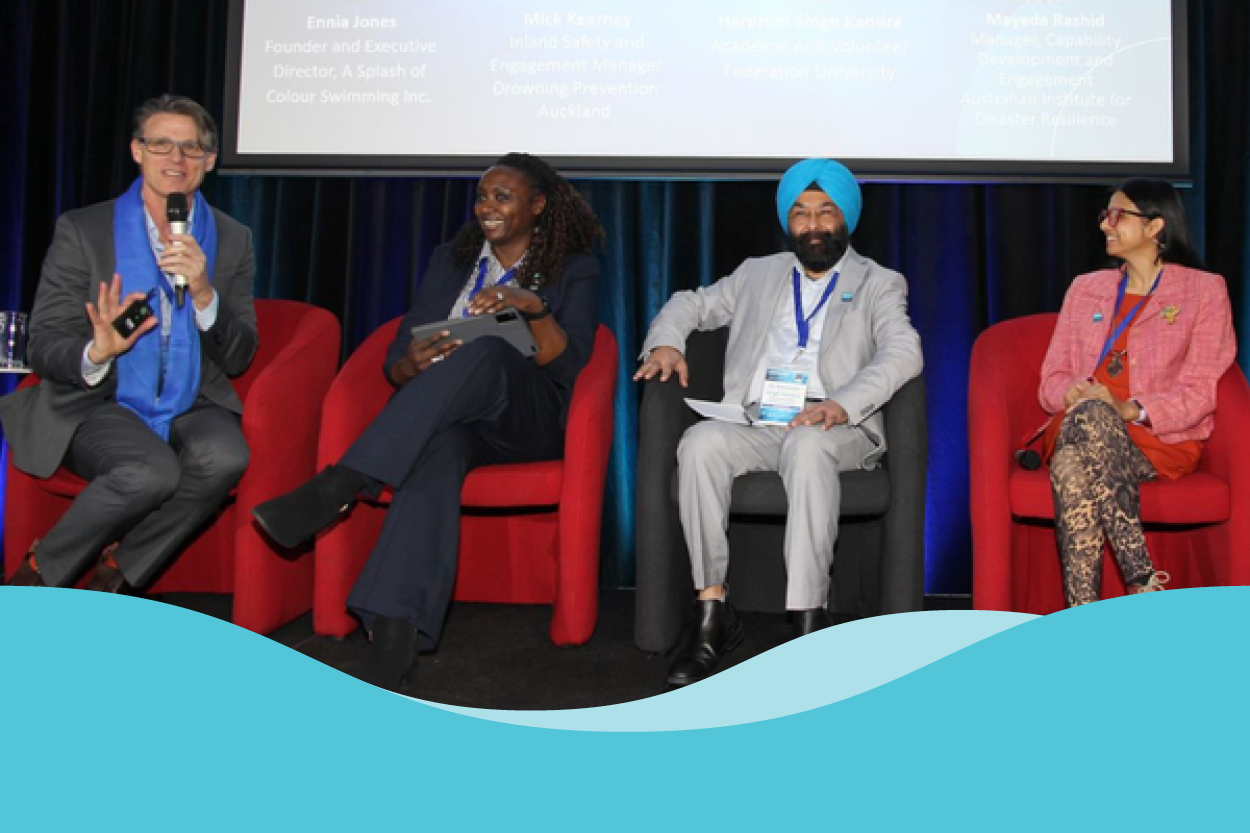
This is a leadership-pathway and bridge-building stream that opens senior sector spaces - the events, forums, conferences and networking that shape aquatics, swimming, water safety and lifesaving - to emerging multicultural professionals aged under 30, giving them a meaningful role, a genuine voice and lasting connections into the sector’s leadership.
Update: 25/09/2026: GRANT ROUND NOW CLOSED
WHAT’S ON OFFER
Grant range: up to $10,000 per event held before 31 May 2027.
Funds available: approximately $100,000 (excl. GST)
Application type: open grant
Active networking: event organisers set out a collaborative workplan (using our template) for value-add activities that engage and network scholars with each other, leadership and Royal Life Saving (e.g. networking events and panels) for monitoring, evaluation and learning as well as for future forums.
WHO SHOULD APPLY
- Organisations: incorporated associations, not-for-profits and established sector organisers with a strong track record supporting the aquatic and leisure industry, the swimming participation ecosystem and/or the lifesaving sector.
- Scholars: early-career professionals under 30 from multicultural backgrounds in community aquatics, swimming or lifesaving - they apply via the Royal Life Saving portal for an event organiser’s event.
APPLICATION PROCESS
- Organisers apply: Describe their event, how much they are applying for (up to $10,000), ticket price and their value for money you offer. Applications are evaluated and events shortlisted against the evaluation criteria. Partnership agreement are set up with Royal Life Saving acknowledged as a WE SWIM partner to the event.
- Advertise and refer: approved event organisers and Royal Life Saving advertise the availability of the WE SWIM Pathfinder - Emerging Leaders scholarships using Royal Life Saving communications materials and direct applicants to the online portal.
- Scholar Selection: Royal Life Saving and the event organiser select scholars together over a two to four week period.
- Invoice: The event organiser invoices Royal Life Saving once for the scholarships disbursed (up to $10,000)
WE SWIM PILLARS
- WE CONNECT (primary) - connect emerging multicultural professionals with senior leadership, networks and decision-making spaces.
- WE WELCOME - scholars build knowledge, skills and confidence, and a future forum deepens shared learning.
- WE PROMOTE - youth multicultural panels and presenters showcase diverse voices and role models.
- WE LEARN - make senior sector spaces more welcoming and representative.
WHAT ORGANISERS MUST DO
- Offer value for money (for example, a discount and/or a co-contribution towards the event entry cost)
- Champion the opportunity widely and point every interested scholar to the Royal Life Saving portal.
- Shortlist and select scholars jointly with Royal Life Saving, applying intersectional criteria.
- Give scholars a meaningful role in the program - for example a youth multicultural panel or as presenters.
- In partnership with Royal Life Saving, welcome and support scholars before, during and after the event.
- Deliver the event in a culturally aware and safe way (for example, organisers and/or MCs completing cultural awareness and safety training) and set out how cultural safety will be delivered.
- Set out a collaborative workplan (using our template) for value-add activities that engage and network scholars with each other, leadership and Royal Life Saving - and connect them for MEL and future forums.
- Attribute the scholarships when advertising, at appointment and through public communications by crediting WE SWIM, Royal Life Saving and the Australian Government.
- Take part in MEL and enable invitations to a future national forum.
- Abide by Royal Life Saving’s code of ethics, cultural safety and child safeguarding protocols.
WHAT THIS FUNDING DOES NOT COVER
Travel, accommodation or meals; internal company conferences or committees; activity that mainly improves one business’s own standing.
GET IN TOUCH
Talk to us before you apply. Early conversations help test program fit, confirm geography, and clarify co-design and co-investment expectations.
GUIDANCE & RESOURCES


Frequently Asked Questions
WE SWIM General
About the WE SWIM program
1. What is WE SWIM?
WE SWIM: Multicultural Community Water Safety Program is a national, evidence-informed initiative to reduce drowning risk, remove barriers to swimming and water safety education, and build belonging for refugees, recently arrived migrants and broader multicultural communities.
2. Who funds and who leads it?
WE SWIM is funded by the Australian Government and led by Royal Life Saving Society – Australia. Royal Life Saving Australia brings national coordination, facilitation of WE SWIM community partnerships, and monitoring, evaluation and learning into one cohesive program.
3. What problem is WE SWIM trying to solve?
Multicultural communities face higher drowning risk from layered vulnerabilities including lower swimming and water safety skills, limited familiarity with local hazards, and financial, language, cultural and access barriers to participation. These vulnerabilities and barriers are most pronounced for refugees and recently arrived migrants during settlement and the decade after and can persist across generations if unaddressed. WE SWIM exists to close that gap.
4. What are the four WE SWIM pillars?
Every funded activity activates one or more of the WE SWIM pillars. They are WE CONNECT (linking multicultural communities to local aquatic facilities, swim schools and clubs); WE WELCOME (improving cultural safety and creating welcoming aquatic environments); WE PROMOTE (delivering multilingual water safety messages through trusted voices), and WE LEARN (removing barriers to participation and building swimming and water safety skills). Each stream's funding guidelines suggests fundable activities for each pillar.
5. Who is WE SWIM for?
Four beneficiary groups: refugees in humanitarian and settlement support programs; recently arrived migrants (in Australia less than 10 years); broader multicultural communities facing access and equity barriers around water; and, where appropriate, international students. Emphasis falls on school-aged children and young people, with a secondary focus on adults and caregivers, whose choices shape family participation and safety.
6. How does WE SWIM align with national policy?
WE SWIM aligns to the Australian Water Safety Strategy 2030 and its target to reduce drowning by 50 per cent by 2030, the Commonwealth's Multicultural Access and Equity Policy, and the Multicultural Framework Review: Towards Fairness. It also reflects Royal Life Saving's strategic framework for eliminating drowning, empowering communities, strengthening safety and succeeding together, and every funded activity is expected to embody that same approach.
The WE SWIM funding streams
7. What are the WE SWIM funding streams?
There are three streams.1/ Place-Based Partnerships funds larger, multi-partner coalitions shifting systems across a multi-LGA or regional footprint. 2/ Community Programs funds targeted, single-organisation-led delivery in one local government area. 3/ Pathfinders which include WE SWIM Pathfinder: Refugee Settlement which funds a small number of pilots integrating water safety into settlement pathways, and WE SWIM Pathfinder: Multicultural Community Ambassador Program funds trusted community voices to deliver communications and advocacy activity. Contact weswim@rlssa.org.au if you're unsure which stream fits your idea.
8. Can we apply to more than one WE SWIM stream at the same time?
Yes. Each stream's funding guidelines set out how many applications a lead organisation can submit within that stream. If you're considering more than one stream. For example, leading a Community Programs application while joining another organisation's Place-Based Partnership as a partner. Talk to us early to avoid overlapping or duplicate proposals.
9. What's the indicative timeline across the WE SWIM funding rounds?
Most streams follow a similar rhythm: documentation released from 18 August 2026, applications closing 24 September 2026, outcomes notified 16 October 2026, and agreements executed shortly after. Delivery generally runs 1 November 2026 to 31 May 2027, with final reporting due by 30 June 2027.
10. Is co-investment required across all streams?
Most streams expect cash and/or in-kind co-investment including things like venue access, staff time, translation or transport support. Clearly describe any co-investment in your budget. Requirements vary by stream and scale, so check your stream's funding guidelines.
Applying through our online grants platform
11. How do we submit an application?
Through the Royal Life Saving Grant Hub. Which is an externally supported online platform, not email or paper. You'll set up an account, complete your application online, upload supporting documents, and submit directly through the platform. We'll provide the link and access instructions when each round opens.
12. Can more than one person work on our application?
Yes. The platform's 'collaborate' feature lets multiple people from your organisation and partnership contribute to the same application – drafting sections or reviewing the budget together. However, the lead organisation must create and submit the application; partners using collaborate cannot submit on its behalf.
13. Who can help us if we have questions before or during our application?
Royal Life Saving's WE SWIM team at weswim@rlssa.org.au. Reach out before submitting – early conversations can confirm program fit, eligibility, partnership expectations and cultural safety considerations, and we can help with technical questions about the platform.
Templates and required documents
14. Can we use our own templates for the workplan, budget, risk assessment or letters of support?
No. Several streams require a workplan, budget, risk assessment and letters of support, and Royal Life Saving has created templates for all of these – find them in the resources section of our website. Please complete and submit using only our templates, not your own formats, so every application can be assessed consistently.
Designing inclusive, safe programs
15. What does Royal Life Saving mean by designing programs with intersectionality in mind?
Programs should be designed with intersectionality in mind, recognising that people often hold overlapping inclusion and access needs across factors including culture, disability, gender and neurodiversity. Programs should be genuinely strengths-based, non-tokenistic, and reflect the real, layered identities of the people they serve rather than treating each factor in isolation.
Reporting, evaluation and staying in touch
16. What is MEL, and what will we report on?
Monitoring, evaluation and learning (MEL) is the program's accountability framework; full participation is a funding condition, proportionate to your project's scale. Royal Life Saving provides common indicators, templates and guidance. Reporting generally covers activity delivery, participant data, access and inclusion outcomes, co-investment, risks and practical learning.
17. Who do we contact with general questions about WE SWIM?
For any general question, or if you're unsure which funding stream fits, contact weswim@rlssa.org.au. More information and our resource templates are at royallifesaving.com.au.
WE SWIM Pathfinder - Emerging Leader
Eligibility and who can apply
1. What is this program, and how does it differ from other WE SWIM streams?
It funds event organisers to offer scholarship places at sector conferences, symposia, forums, workshops, working groups and advisory committees, so early-career multicultural professionals under 30 can attend, network with and influence senior sector leadership. See section 1.2 of the funding guidelines.
2. Who can apply, and what makes an event eligible?
Only event organisers – typically incorporated associations, not-for-profits, peak bodies or other established sector conveners with a genuine track record of bringing the sector together. The event must be open to groups across the sector, held between now and 30 June 2027, and not an internal company conference or committee. See sections 2.1 and 3.3 of the funding guidelines.
3. Is this an open competitive grant round, or does Royal Life Saving invite applicants?
It's an open, publicly advertised grant Any eligible organiser can apply directly, no invitation needed. See sections 1.3 and 9 of the funding guidelines.
4. How many applications can one organisation lead?
One per lead organisation, reflecting this stream's modest scale of up to $10,000 per event from a total pool of approximately $100,000. Contact weswim@rlssa.org.au if you convene more than one eligible event.
5. Can small or first-time organisers still apply?
Yes. What matters most is a genuine, demonstrated track record of convening the sector, not prior experience with Royal Life Saving or WE SWIM. Tell us about your event's history and reach. See section 2.1 of the funding guidelines.
What this stream supports (and doesn't)
6. What does the grant fund?
Emerging leader scholarships only, including things like the ticket, registration or attendance costs for the multicultural scholars selected for your event, at a value-for-money rate agreed with Royal Life Saving. See section 3.1 of the funding guidelines.
7. What won't this stream fund?
Travel, accommodation, meals, bursaries or per diems of any kind, and tickets to a business's own internal conferences or committees. Ask us if unsure. See section 3.3 of the funding guidelines.
8. How much can we apply for, and what value for money do we need to offer?
Up to $10,000 per event, with the majority going to scholar tickets and only a minor share to recruitment and coordination. Organisers must also offer value for money. For example, a discount and/or co-contribution against the ticket price. See sections 3.1 and 7 of the funding guidelines.
9. What's the difference between the two stages of this opportunity?
Stage 1: organisers apply to Royal Life Saving for an event approval and scholarship allocation of up to $10,000. Stage 2: once approved, organisers and Royal Life Saving advertise the scholarships, scholars apply directly through the online portal, and shortlisting and selection are done jointly. See section 1.3 of the funding guidelines.
Scholars, selection and cultural safety
10. Who are the scholars, and what makes someone eligible?
Early-career professionals under 30 from multicultural backgrounds who work, volunteer, or are building a career in community aquatics, swimming or lifesaving. See section 2.1 of the funding guidelines.
11. Do scholars apply through us, or directly to Royal Life Saving?
Directly to Royal Life Saving, through the online scholarship portal. Organisers advertise the opportunity and direct interested scholars there but don't collect applications themselves; Royal Life Saving then shortlists jointly with the organiser. See sections 2.2 and 9.1 of the funding guidelines.
12. How does intersectionality factor into scholar selection?
Royal Life Saving and the organiser shortlist and select jointly against intersectional eligibility criteria, recognising that people often hold overlapping inclusion and access needs across culture, disability, gender and neurodiversity. See sections 2.1 and 7 of the funding guidelines.
13. What cultural safety and child safeguarding requirements apply?
Organisers must deliver the event in a culturally aware and safe way. For example, organisers and/or masters of ceremony completing cultural awareness training and comply with WE SWIM Code of Conduct protocols, including working-with-children requirements wherever children are involved. See section 5 of the funding guidelines.
Involvement, collaboration and attribution
14. What are our obligations once we're an approved organiser?
Promote and refer scholars to the portal, select them jointly with Royal Life Saving, meaningfully involve them in the event program, support them before, during and after, deliver the event culturally safely, collaborate on the agreed workplan, attribute the scholarship, take part in MEL. See section 2.2 of the funding guidelines.
15. What does “meaningful involvement” look like for scholars?
A genuine role, not simply attending. For example, speaking on a panel, presenting or contributing to a working session. Using the WE SWIM Workplan Template, your workplan should set out how value-add activities, such as networking events and scholar panels, will actively engage scholars with each other, senior sector leadership and Royal Life Saving. See sections 2.2 and 9.1 of the funding guidelines.
16. How do we attribute the scholarship?
Attribution happens at three points – advertising, appointment of scholars, and public communications, including at least one attribution post and one publication per scholar about their participation. See sections 4.1 of the funding guidelines.
Funding, assessment and how this stream fits together
17. How is our application assessed?
All applications are assessed against a five common and weighted assessment criteria as follows 1) Community need and local fit (20%), 2) Partnership strength, delivery capability and sustainability (30%), 3) Alignment to WE SWIM pillars and outcome pathways (20%), 4) Value for money and co-investment (20%), and Monitoring, Evaluation and Learning (MEL) readiness (10%). See sections 7 and 8 of the funding guidelines.
18. What's the timeline for this opportunity?
Documentation is released from 18 August 2026, applications close 24 September 2026, outcomes are notified 16 October 2026, and funding agreements are executed 20 October 2026. Delivery runs 1 November 2026 to 31 May 2027, with final reporting due 30 June 2027. See section 9.2 of the funding guidelines.
19. What reporting and MEL obligations apply?
A final report covering activity delivery, participant data, access and inclusion outcomes, co-investment, learnings and financial acquittal, plus participation in reasonable MEL activities such as surveys, interviews or case studies. Scholar contact details are captured through the Royal Life Saving portal at application. See sections 6 and 11 of the funding guidelines.