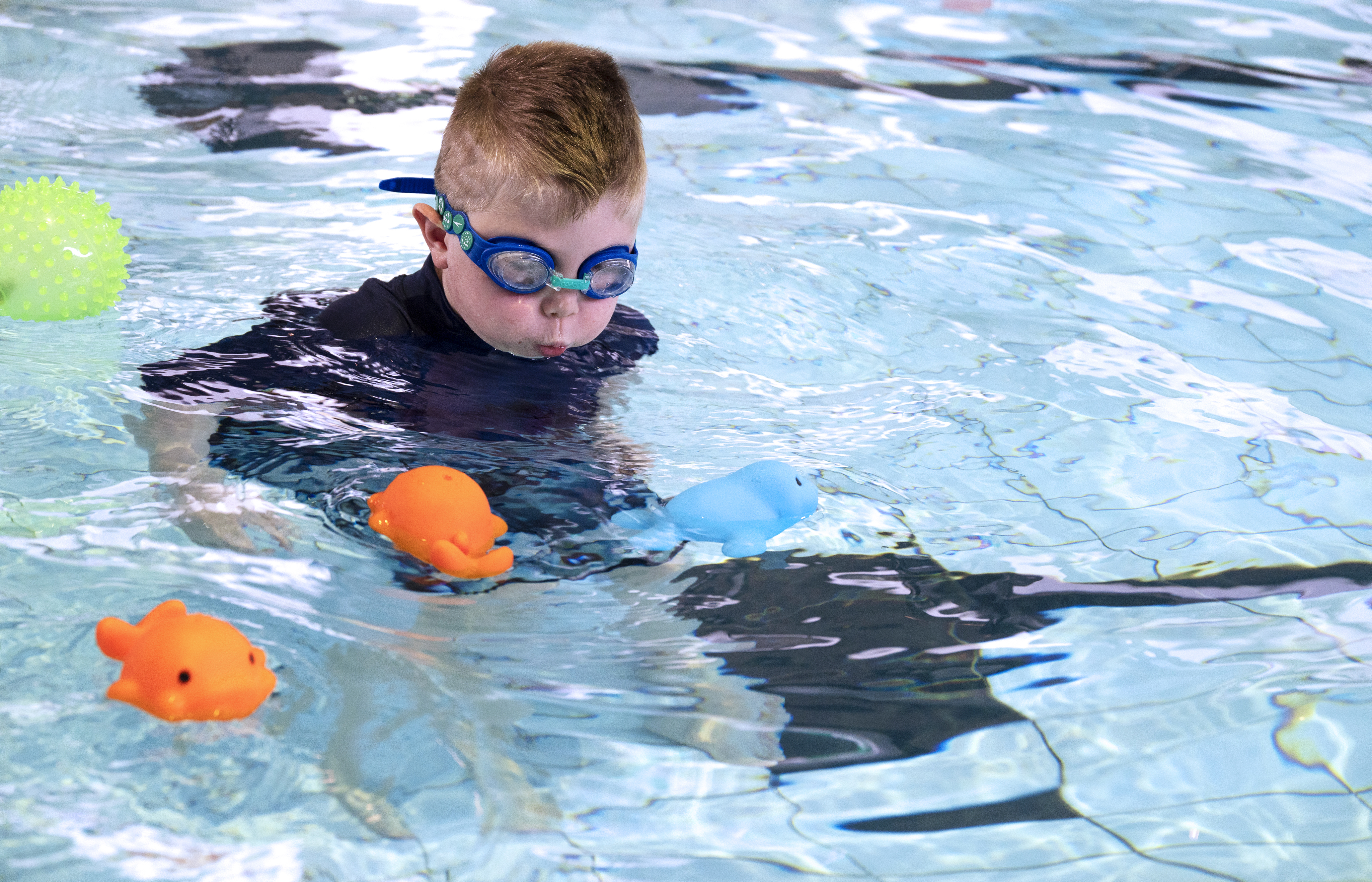
Providing equitable access to swimming and water safety education is an essential part of reducing drowning risk and building inclusive, safe communities.
Children and young people who are deaf or hard of hearing have the same abilities, potential and right to participate safely and confidently in aquatic environments as their hearing peers. With inclusive teaching practices and effective communication strategies, they can successfully learn to swim, develop strong water safety skills and build the knowledge required for lifelong participation in aquatic activity.
Note: References to ‘deaf or hard of hearing children’ throughout this article may also apply to deaf or hard of hearing adults where relevant.
Why Risk May Be Increased
Aquatic environments rely heavily on sound for communication and hazard awareness. This can create additional challenges for children who are deaf or hard of hearing.
Key risk considerations include:
- Lifeguard whistles, verbal warnings, public address announcements or shouted instructions rely on sound, meaning they may not be accessible
- Approaching hazards such as waves, rips, other swimmers or moving watercraft may not be immediately communicated or understood without clear visual cues or direct line of sight
- Communication barriers during lessons, supervision or emergency situations
- Difficulty hearing instructions during group activities
- Sensory overload in busy aquatic environments, which may affect concentration and situational awareness
In open water environments, such as beaches, rivers and lakes additional hazards may be present. Reliance on auditory warning systems, (e.g. whistles or loudspeaker announcements) can create further challenges, as children who are deaf or hard of hearing may not detect audible warnings about:
- Changing water conditions
- Rip currents
- Dangerous flora or fauna
- Watercraft traffic
- Sudden weather changes
- Emergency actions underway
Families and carers should:
- Choose patrolled locations wherever possible
- Establish agreed visual signals before entering the water
- Maintain continuous visual supervision
- Check conditions in, on and around the water before approaching and entering the water
- Ensure children know how to attract attention visually if assistance is required
Inclusive, accessible water safety education increases engagement, confidence and real-world safety outcomes, while supporting families to safely enjoy aquatic environments together.
Equitable Access to Swimming and Water Safety Education
Learning to swim and developing water safety knowledge are essential life skills. Deaf and hard of hearing children (and their parents or carers) should not be disadvantaged in accessing swimming lessons or aquatic programs due to inaccessible facilities and equipment, communication barriers, limited instructor confidence, or a lack of suitable program availability.
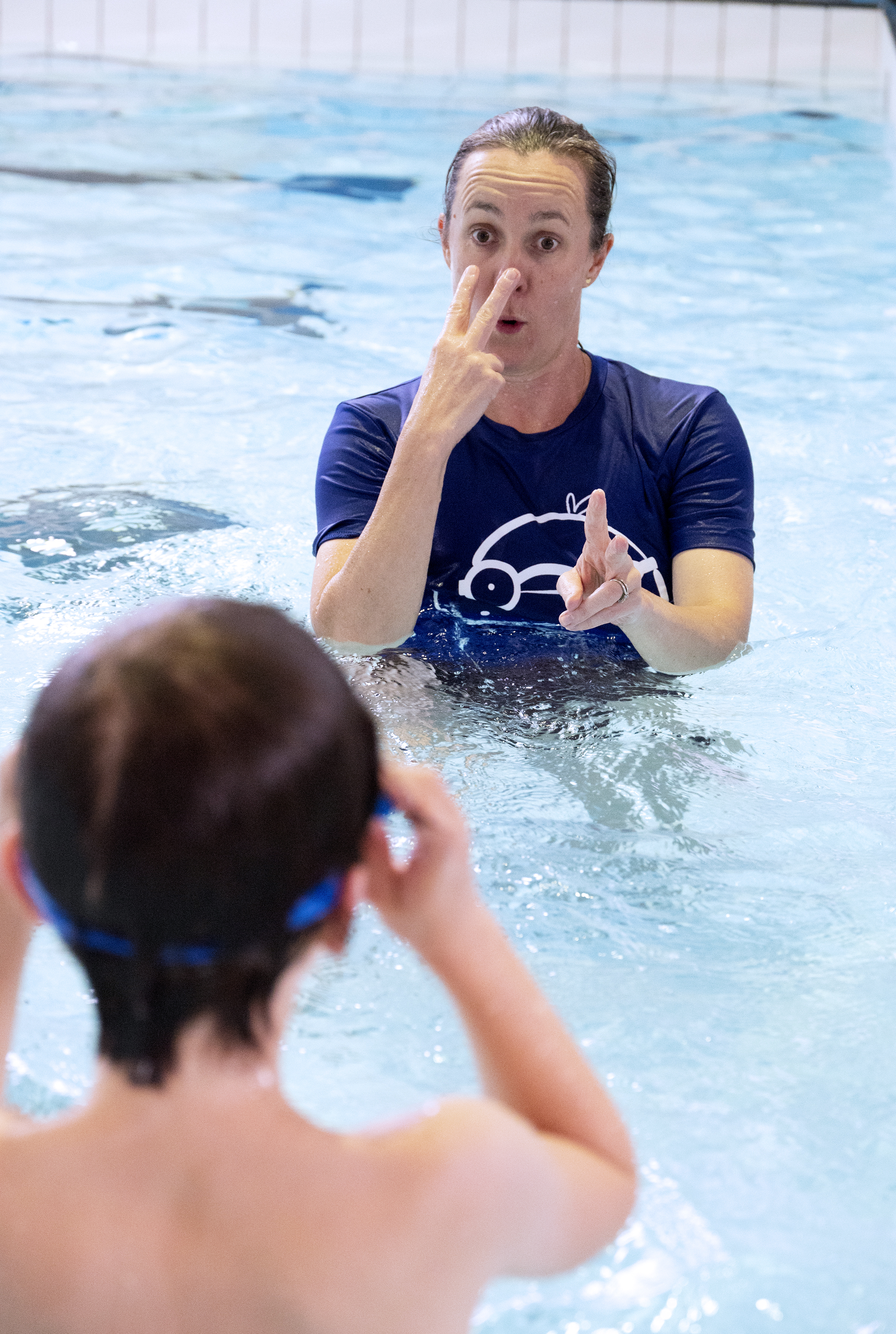
Swim schools and aquatic facilities play an important role in:
- Adapting the facility and aquatic environments to create accessible spaces
- Creating inclusive learning environments that promote positive peer interactions and group participation
- Ensuring instructors use clear and effective visual communication strategies
- Adapting lesson delivery to meet diverse communication needs
- Supporting families to access, and engage confidently in, aquatic programs
Inclusive approaches not only improve safety outcomes, but also build confidence, independence and lifelong participation in physical activity.
Practical Safety Strategies
Creating a safe, welcoming and inclusive environment for deaf and hard of hearing children should be a priority for every aquatic facility and swim school.
Aquatic facilities and swim schools should consider:
- Undertaking a risk management process that identifies, assesses and treats specific risks for deaf and hard of hearing children.
- Training all staff in basic and inclusive communication strategies for deaf and hard of hearing children.
- Implementing visual warnings systems and emergency alarms to accompany sound-based.
- Asking questions on enrolment forms to best understand a child’s communication abilities.
- Supporting swim teachers to develop their knowledge, skills and techniques in delivering safe and inclusive lessons for deaf and hard of hearing children.
Parents and carers should consider:
- Educating themselves about water safety and safe behaviours applicable to the environments they are visiting.
- Modelling safe behaviours at all times.
- Teaching children about safe behaviours prior to visiting aquatic environments.
- Setting clear behavioural boundaries, including where children are permitted to play and swim.
Notwithstanding the importance of each of the above actions, close, attentive parental or carer supervision remains essential at all times, particularly for young children and weaker swimmers.
Further Information - Programs and Resources
The following providers and programs support swim teachers, deaf or hard of hearing children, and their parents or carers in relation to water safety and learning to swim. While the focus below is on deaf and hard of hearing participants, many other organisations offer specialised aquatic programs and support for children with disability more broadly.
- Deaf Children Australia:
- Puggles Swim Course – A comprehensive learning program covering all aspects of teaching children who are deaf or hard of hearing, equipping swim teachers with key Auslan signs and practical strategies to adapt learn-to-swim classes using deaf-friendly approaches.
- Puggles Open Water - A free interactive resources supporting lifeguards, parents, carers, schools and clubs to safely include deaf and hard of hearing children in open water environments.
- Parents of Deaf Children: Inclusive Swimming for Deaf and Hard of Hearing Children. An online course supporting inclusive teaching practices.
If you are aware of other providers specifically focused on water safety and swim teaching for deaf or hard of hearing children or adults, please contact us at info@rlssa.org.au.