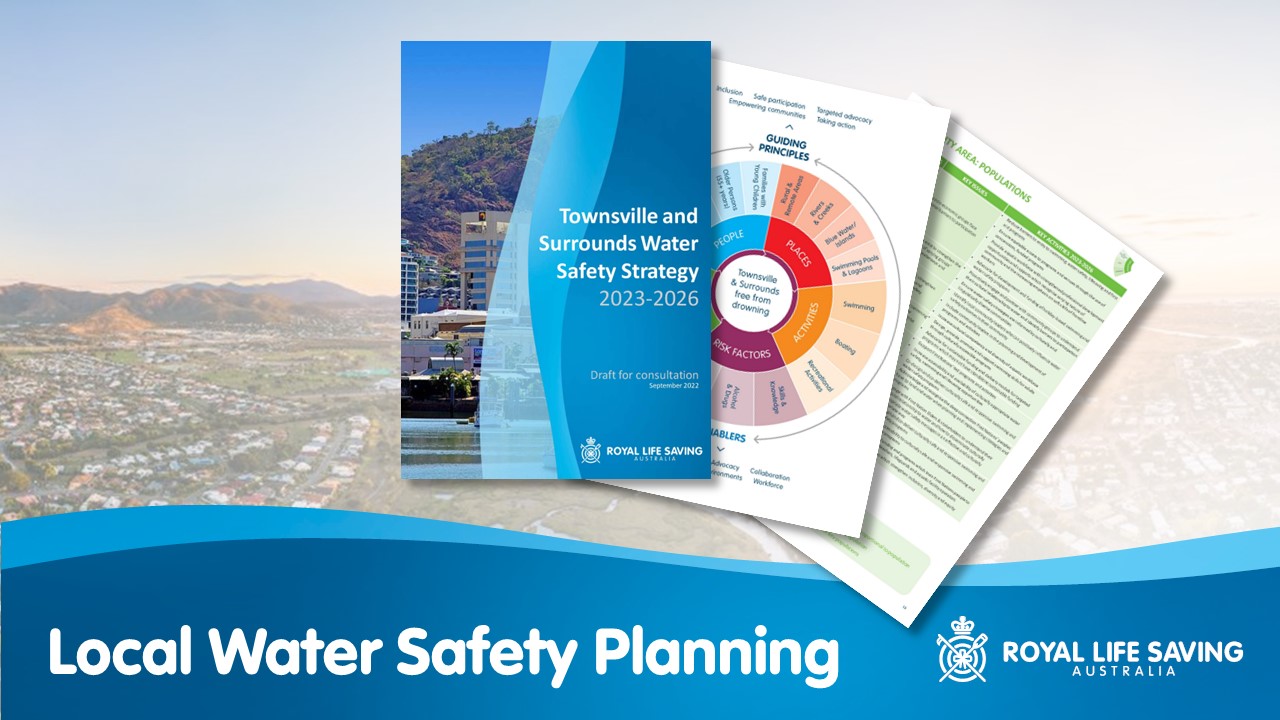
Developing a Local Water Safety Plan
Overview
One of the national imperatives of the Australian Water Safety Strategy 2030 is localised water safety efforts. Local water safety planning allows us to move from awareness to action, supporting agencies and communities to work together in ways that genuinely reduce drowning and serious injury. Local water safety planning is about listening to local communities, understanding how and where people use the water, and tailoring solutions to match.
A Local Water Safety Plan outlines existing and future community-based drowning prevention actions tailored to individual community contexts. The approach emphasises the role of evidence-based solutions, multi-sectoral collaboration and the capabilities and needs of varying stakeholders, including community and government organisations and vulnerable groups.
Royal Life Saving can assist with developing a local plan tailored to your region, community or organisation.
Plan development options:
- Developing a local drowning profile inclusive of key data and locations
- Facilitating community consultation through surveys, local workshops and forums
- Conducting a community-level detailed assessment and profile of drowning prevention infrastucture, programs, policy and campaigns with expert recommendations
- Conducting individual assessments or key aquatic recreation locations including inland waterways to ensure risk management practices are in line with industry standards and legislation
- Bringing together key ecosystem players such as emergency services, water safety organisations, the aquatic industry, government agencies and recreational groups
- Conducting research into local drowning issues and risk factors
- Facilitating multi-agency or community strategy setting workshops and forums to establish common understandings of issues and ways of solving them
- Drafting, iterating and publishing a professionally designed Royal Life Saving Water Safety Strategy for your region / town
Plan development benefits:
- Prevent future drownings and save lives
- Take leadership on an important social, health and economic issue
- Reduce the negative social, health and economic impacts of drowning in your community
- Gain local data and research into drowning issues and risk factors
- Understand and profile drowning issues and risk factors
- Facilitate a common understanding of local drowning and water safety issues specific to the region
- Develop stronger ties to community groups and like-minded agencies
- Spotlight key research and data relevant to the area to interested parties and those with a responsibility for water safety
- Support a commitment to working together on a collective strategy for the region
- Work towards evidence-based solutions/actions that could be collated into a local water safety drowning prevention plan
- Demonstrate positive actions on drowning prevention in line with international and national frameworks
- Gain independent and expert information and advice
- Maintain a working relationship with the peak body and deepen partnerships and collaboration
- Achieve recognition for safety leadership and practices
- Reduce legal risk