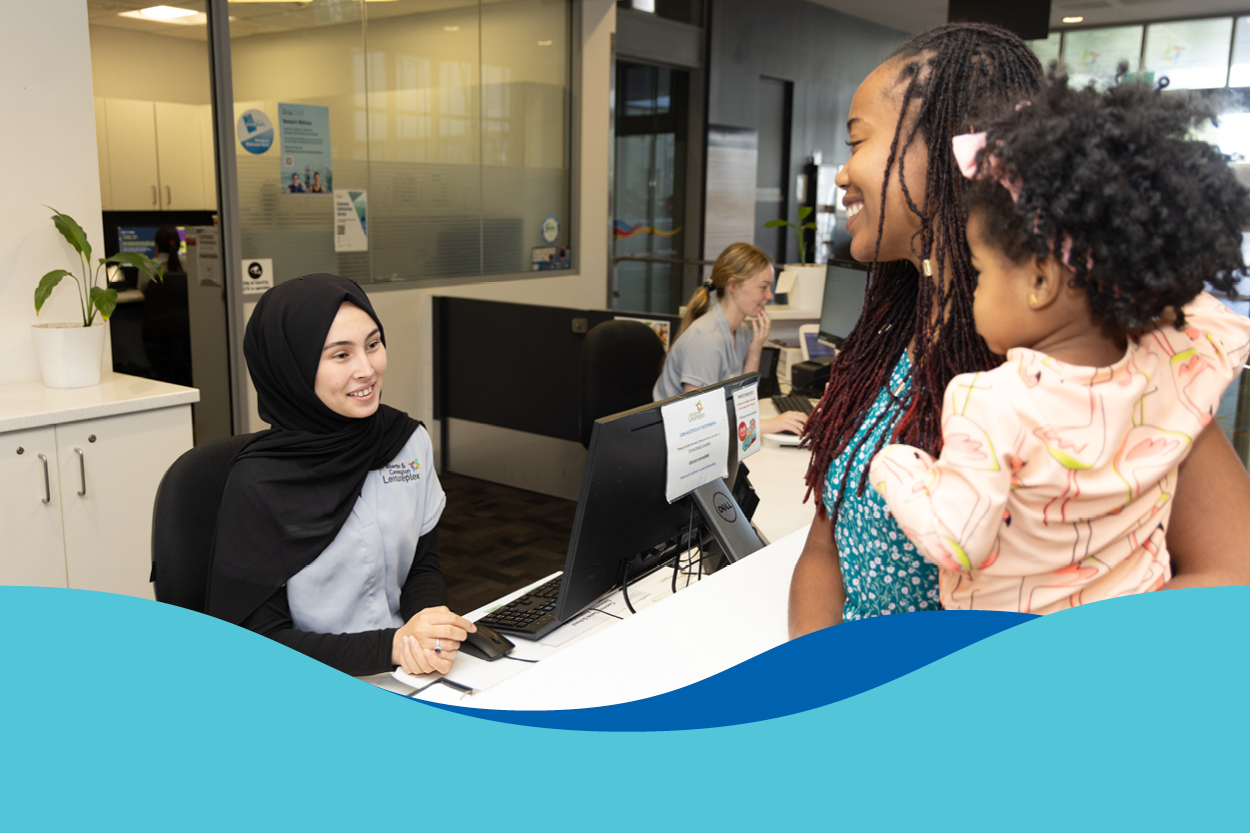
Pathfinder - Refugee Settlement
This stream builds water safety into early settlement in high-need metropolitan and/or regional settlement regions. It supports 2-4 local pilots that attach subsidised, culturally safe lessons and hazard awareness to existing settlement pathways, so water safety becomes routine settlement practice.
Update: 25/09/2026: GRANT ROUND NOW CLOSED
WHAT’S ON OFFER
Grant range: up to $100,000 (ex GST)
Funds available: approximately $300,000 (excl. GST)
Application type: targeted expression of interest
WHO SHOULD APPLY
A lead organisation applying on behalf of a consortium that includes:
- At least one settlement or humanitarian service provider, migrant resource centre, AMEP or community English provider
- At least one water safety organisation and/or aquatic provider - a pool, aquatic facility, swim school or similar
- At least one council or council representative
- Other relevant local partners as suited to the pilot — refugee and cultural associations, councils, schools, family or youth services
The lead applicant must be an incorporated not-for-profit or incorporated body with the governance and financial capability to manage a partnership at this scale.
THE FOUR WE SWIM PILLARS
Every funded activity activates one or more of:
- WE CONNECT - build links between refugee background communities, settlement agencies and local aquatic facilities
- WE WELCOME - make aquatic environments culturally safe, welcoming and easier to navigate for newly arrived families
- WE PROMOTE - share water safety messages in language, through trusted channels within settlement settings
- WE LEARN - remove barriers to swimming and water safety education, and build practical skills
WHO THIS REACHES
- Refugees and humanitarian entrants in settlement programs
- Recently arrived migrants and families
- Emphasis on school-aged children, young people 15–24, and parents or caregivers
HOW FUNDING IS USED
- A strong in-water component required within the delivery allocation
- Co-investment expected - matched or higher cash and in-kind contributions from consortium partners
- No more than 20% to coordination
SAFETY AND CO-DESIGN
- Delivery only at GSPO-compliant venues with qualified staff
- Trauma-informed and culturally safe practice, with shared child safety, consent and incident arrangements between partners
- Refugee and migrant representatives help shape timing, session types, gender settings and communication
GET IN TOUCH
Talk to us before you apply. Early conversations help test program fit, confirm geography, and clarify co-design and co-investment expectations.
GUIDANCE

SUPPORT RESOURCES


FREQUENTLY ASKED QUESTIONS
WE SWIM General
About the WE SWIM program
1. What is WE SWIM?
WE SWIM: Multicultural Community Water Safety Program is a national, evidence-informed initiative to reduce drowning risk, remove barriers to swimming and water safety education, and build belonging for refugees, recently arrived migrants and broader multicultural communities.
2. Who funds and who leads it?
WE SWIM is funded by the Australian Government and led by Royal Life Saving Society – Australia. Royal Life Saving Australia brings national coordination, facilitation of WE SWIM community partnerships, and monitoring, evaluation and learning into one cohesive program.
3. What problem is WE SWIM trying to solve?
Multicultural communities face higher drowning risk from layered vulnerabilities including lower swimming and water safety skills, limited familiarity with local hazards, and financial, language, cultural and access barriers to participation. These vulnerabilities and barriers are most pronounced for refugees and recently arrived migrants during settlement and the decade after and can persist across generations if unaddressed. WE SWIM exists to close that gap.
4. What are the four WE SWIM pillars?
Every funded activity activates one or more of the WE SWIM pillars. They are WE CONNECT (linking multicultural communities to local aquatic facilities, swim schools and clubs); WE WELCOME (improving cultural safety and creating welcoming aquatic environments); WE PROMOTE (delivering multilingual water safety messages through trusted voices), and WE LEARN (removing barriers to participation and building swimming and water safety skills). Each stream's funding guidelines suggests fundable activities for each pillar.
5. Who is WE SWIM for?
Four beneficiary groups: refugees in humanitarian and settlement support programs; recently arrived migrants (in Australia less than 10 years); broader multicultural communities facing access and equity barriers around water; and, where appropriate, international students. Emphasis falls on school-aged children and young people, with a secondary focus on adults and caregivers, whose choices shape family participation and safety.
6. How does WE SWIM align with national policy?
WE SWIM aligns to the Australian Water Safety Strategy 2030 and its target to reduce drowning by 50 per cent by 2030, the Commonwealth's Multicultural Access and Equity Policy, and the Multicultural Framework Review: Towards Fairness. It also reflects Royal Life Saving's strategic framework for eliminating drowning, empowering communities, strengthening safety and succeeding together, and every funded activity is expected to embody that same approach.
The WE SWIM funding streams
7. What are the WE SWIM funding streams?
There are three streams.1/ Place-Based Partnerships funds larger, multi-partner coalitions shifting systems across a multi-LGA or regional footprint. 2/ Community Programs funds targeted, single-organisation-led delivery in one local government area. 3/ Pathfinders which include WE SWIM Pathfinder: Refugee Settlement which funds a small number of pilots integrating water safety into settlement pathways, and WE SWIM Pathfinder: Multicultural Community Ambassador Program funds trusted community voices to deliver communications and advocacy activity. Contact weswim@rlssa.org.au if you're unsure which stream fits your idea.
8. Can we apply to more than one WE SWIM stream at the same time?
Yes. Each stream's funding guidelines set out how many applications a lead organisation can submit within that stream. If you're considering more than one stream. For example, leading a Community Programs application while joining another organisation's Place-Based Partnership as a partner. Talk to us early to avoid overlapping or duplicate proposals.
9. What's the indicative timeline across the WE SWIM funding rounds?
Most streams follow a similar rhythm: documentation released from 18 August 2026, applications closing 24 September 2026, outcomes notified 16 October 2026, and agreements executed shortly after. Delivery generally runs 1 November 2026 to 31 May 2027, with final reporting due by 30 June 2027.
10. Is co-investment required across all streams?
Most streams expect cash and/or in-kind co-investment including things like venue access, staff time, translation or transport support. Clearly describe any co-investment in your budget. Requirements vary by stream and scale, so check your stream's funding guidelines.
Applying through our online grants platform
11. How do we submit an application?
Through the Royal Life Saving Grant Hub. Which is an externally supported online platform, not email or paper. You'll set up an account, complete your application online, upload supporting documents, and submit directly through the platform. We'll provide the link and access instructions when each round opens.
12. Can more than one person work on our application?
Yes. The platform's 'collaborate' feature lets multiple people from your organisation and partnership contribute to the same application – drafting sections or reviewing the budget together. However, the lead organisation must create and submit the application; partners using collaborate cannot submit on its behalf.
13. Who can help us if we have questions before or during our application?
Royal Life Saving's WE SWIM team at weswim@rlssa.org.au. Reach out before submitting – early conversations can confirm program fit, eligibility, partnership expectations and cultural safety considerations, and we can help with technical questions about the platform.
Templates and required documents
14. Can we use our own templates for the workplan, budget, risk assessment or letters of support?
No. Several streams require a workplan, budget, risk assessment and letters of support, and Royal Life Saving has created templates for all of these – find them in the resources section of our website. Please complete and submit using only our templates, not your own formats, so every application can be assessed consistently.
Designing inclusive, safe programs
15. What does Royal Life Saving mean by designing programs with intersectionality in mind?
Programs should be designed with intersectionality in mind, recognising that people often hold overlapping inclusion and access needs across factors including culture, disability, gender and neurodiversity. Programs should be genuinely strengths-based, non-tokenistic, and reflect the real, layered identities of the people they serve rather than treating each factor in isolation.
Reporting, evaluation and staying in touch
16. What is MEL, and what will we report on?
Monitoring, evaluation and learning (MEL) is the program's accountability framework; full participation is a funding condition, proportionate to your project's scale. Royal Life Saving provides common indicators, templates and guidance. Reporting generally covers activity delivery, participant data, access and inclusion outcomes, co-investment, risks and practical learning.
17. Who do we contact with general questions about WE SWIM?
For any general question, or if you're unsure which funding stream fits, contact weswim@rlssa.org.au. More information and our resource templates are at royallifesaving.com.au.
WE SWIM Pathfinders - Refugee Settlement
Eligibility and who can apply
1. What is this program trying to achieve?
It tests whether subsidised, culturally safe water safety activity can become a routine part of early settlement rather than a one-off add-on. It funds 2–4 pilots attaching swimming and water safety to settlement pathways, referral from case managers, schools and settlement services, to learn what works and how to scale it. See section 1.3 of the funding guidelines.
2. Who can apply, and what does our consortium need to include at minimum?
A lead organisation applies on behalf of a consortium of at least three partner types: a settlement or humanitarian service provider, migrant resource centre or community English provider; a water safety or aquatic provider; and a council or council representative. The lead must be incorporated with the capability to manage a multi-partner pilot; other local partners are welcome in addition. Multiple people can contribute via the platform's 'collaborate' feature, but only the lead submits. See section 2.3 of the funding guidelines.
3. Is this an open competitive grant round, or does Royal Life Saving invite applicants?
A targeted expression of interest to consortia and not a broad open round. If your community and pathway are a strong fit, contact weswim@rlssa.org.au to talk through fit and readiness. See section 9.1 of the funding guidelines.
4. How many pilots can one organisation lead?
One application per lead organisation, reflecting this stream's small scale of only 2–3 pilots nationally. Talk to us early if your idea might suit more than one stream.
5. We're a small or grassroots organisation; can we still be part of a consortium?
Yes. Smaller settlement agencies and community organisations bring exactly the trust this pilot model depends on. You don't need to be the lead applicant. Joining as the settlement or cultural partner still shapes the pilot's design and delivery.
Partnership, governance and co-design
6. Do we need a formal steering group, and when does it need to be in place?
Yes. A Regional or Local Steering Group is mandatory, established within the first two months of your funding agreement, overseeing delivery, safety and decisions across partners. See section 9.4 of the funding guidelines.
7. What does genuine co-design with refugee and migrant communities look like in practice?
Refugee and migrant representatives help shape practical decisions – timing, session types, gender settings and family communication – not just review a finalised plan. Your expression of interest must describe this process alongside a short co-design and engagement plan. See section 5.2 of the funding guidelines.
8. What supporting documents and evidence do we need to submit?
Letters of support from consortium partners, a project plan covering sites, delivery model and roles, a budget including co-investment, evidence of incorporation and insurance, and a co-design plan. Pilots involving under-18s must also upload a Child Safeguarding Policy and a completed Risk Assessment. See section 9.3 of the funding guidelines.
9. How does child safeguarding work across a multi-partner consortium?
The lead organisation and any partner with direct contact with children needs a current Child Safeguarding Policy, and staff working with children need current Working With Children Certificates and safeguarding training before or shortly after the pilot begins. Your application must describe how safety, consent and incident reporting will be shared across partners.
Who we're prioritising, and cultural safety
10. Who are the priority participants and age groups?
Refugees and humanitarian entrants in settlement programs, and emphasising school-aged children, young people aged 15–24, and parents or caregivers. Pilots are expected to reach several thousand participants across 2–4 high-need settlement regions. See sections 2.1 and 2.2 of the funding guidelines.
11. What does cultural safety and trauma-informed practice mean here, and how do we demonstrate it?
As many participants will be newly arrived refugees, your application must describe how staff will work sensitively with families who may have experienced trauma, and how sessions will feel safe – including gender-sensitive options and bilingual support. Delivery must occur only at GSPO-compliant venues with qualified supervision and shared safety arrangements across partners. See section 5.1 of the funding guidelines.
12. Will staff need cultural safety training?
Yes. Everyone delivering the program must complete approved cultural safety training before activities begin. Royal Life Saving can help you access suitable training. Don’t stress, building cultural safety is a journey, so entry level training counts as a step forward.
13. Does the settlement focus rule out broader community programs?
It funds focused pilots that clearly link water safety to referral points within settlement pathways – not broad community delivery unanchored to those pathways. If your idea is closer to community-wide delivery, WE SWIM Community Programs is the better fit. See section 2.4 of the funding guidelines.
Funding, costs and budget
14. How much can we apply for, and is co-investment required?
Up to $100,000 (excl. GST) per pilot, from a total pool of roughly $300,000 funding 2–4 pilots nationally. Local co-investment e.g. lane space, staff time, venue access or bilingual assistance, is expected, matched or higher, and quantified in your budget. See sections 4.1 and 4.2 of the funding guidelines.
15. What can grant funding be used for?
Short-term staffing, pool entry, lane and venue hire, interpreter and cultural support costs, lesson subsidies, multilingual communications, transport and swimwear assistance, staff briefings and MEL costs, all clearly connected to your settlement-pathway model. See section 3.2 of the funding guidelines.
16. What won't be funded?
We won’t fund things like business-as-usual overheads, capital works or major equipment, and pre-agreement costs. Or Broad community delivery untied to a settlement pathway, unapproved incentives or travel, and duplicate funding are also out of scope. Ask us in writing if unsure. See section 3.3 of the funding guidelines.
17. Is this a one-off pilot, or will funding continue beyond one year?
Delivery must be completed by 31 May 2027 – a one-year commitment, with potential extension if a pilot shows strong learning and funding continues. Tell us how your pilot could sustain or scale beyond the funded period.
Submission, timelines and how this stream fits together
18. What's the timeline for this opportunity?
Documentation is released from 18 August 2026, applications close 24 September 2026, and outcomes are notified 16 October 2026. Agreements are executed by 20 October 2026; your Steering Group must be established within two months of that, and delivery must be completed by 31 May 2027, with final reporting due 30 June 2027. See section 7 of the funding guidelines.
19. How are applications assessed?
All applications are assessed against a five common and weighted assessment criteria as follows 1) Community need and local fit (20%), 2) Partnership strength, delivery capability and sustainability (30%), 3) Alignment to WE SWIM pillars and outcome pathways (20%), 4) Value for money and co-investment (20%), and Monitoring, Evaluation and Learning (MEL) readiness (10%). See section 7 and 8 of the funding guidelines.
20. How is this different from Place-Based Partnerships?
Place-Based Partnerships is for large, diverse LGA, multi-LGA coalitions working with broadly defined multicultural communities. Refugee Settlement is funding only 2–4 pilots, focused on embedding water safety into refugee settlement pathways.