Published: 12 December 2025
National Aquatic Industry Committee authorises two new GSPO safety guidelines for aquatic facilities
The National Aquatic Industry Committee (NAIC) has formally authorised the release of two updates to the Guidelines for Safe Pool Operations (GSPO), strengthening nationally consistent safety expectations for aquatic facilities across Australia.
Published by Royal Life Saving Australia (RLSA) on behalf of the national aquatic industry, the updated guidelines address two areas of risk and increasing complexity for facility designers, owners and operators:
- Diving Safety at Swimming Pools
- New and Modified Safety Equipment
The GSPO has been maintained and developed by Royal Life Saving since 1992 and is recognised as national industry best practice for the safe design and operation of aquatic facilities. While published by RLSA, the GSPO represents the collective, authorised position of the aquatic industry, developed through extensive consultation and review led by the NAIC.
Industry-authorised guidance, developed by industry
Under a range of legal and regulatory frameworks, aquatic facility operators are required to ensure the health and safety of patrons and workers. The GSPO plays a critical role in compiling and contextualising these obligations into practical, industry-relevant guidance.
The newly authorised guidelines were developed through NAIC’s established consultative processes, drawing on expertise from facility operators, peak bodies, regulators, training providers and technical specialists from across Australia.
RJ Houston, General Manager – Capability & Industry at Royal Life Saving Australia, said the NAIC’s role is central to ensuring guidance reflects both regulatory expectations and operational reality.
“These guidelines are authorised by the National Aquatic Industry Committee to provide clarity and consistency in areas where the consequences of getting it wrong can be severe. They are written by industry, for industry, and are intended to support practical, defensible decision-making at the facility level.”
New consolidated guideline: Diving Safety at Swimming Pools
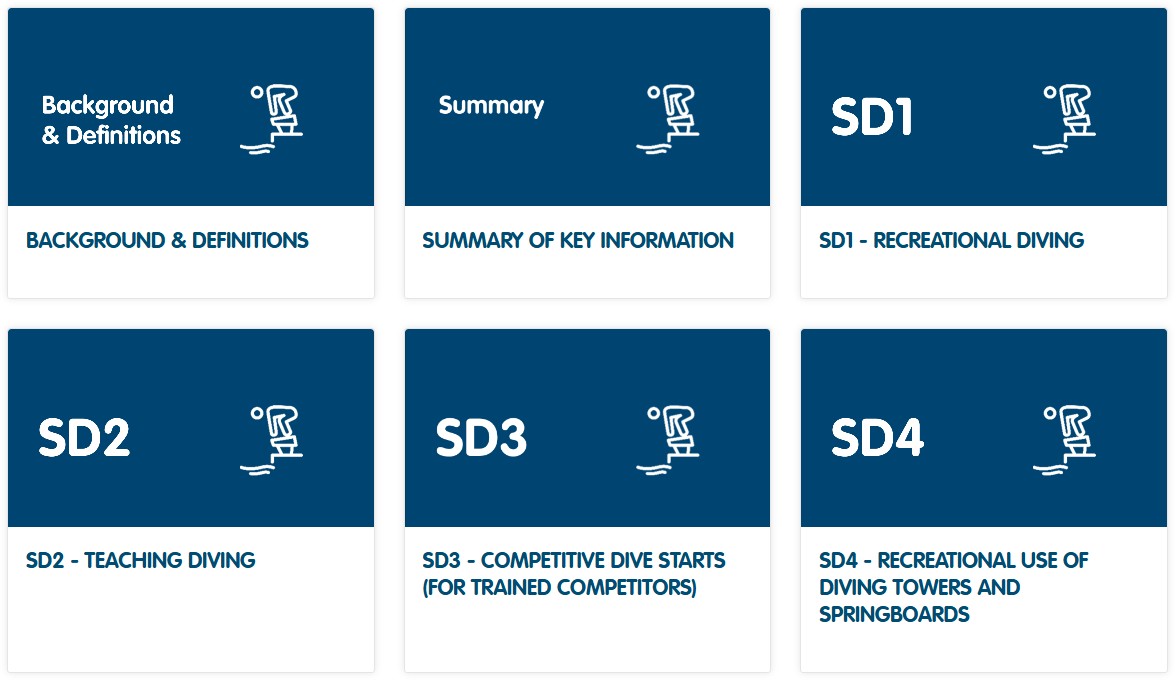
The Diving Safety at Swimming Pools guideline consolidates nationally consistent expectations for managing recreational diving, teaching diving, competitive dive starts, and the use of springboards and platforms into a single guideline.
The guideline provides clear direction on:
- Minimum water depths and forward clearance requirements for different diving activities
- Supervision, instruction and competency expectations when diving is permitted or taught
- Risk controls for competitive dive starts, including differentiation between trained and entry-level participants
- Design and operational considerations for diving boards and platforms
The guideline reinforces the need for facilities to actively manage spinal injury risk through appropriate design, operational controls, qualified supervision and emergency preparedness.
Revised guideline: SE2 – New and Modified Safety Equipment (2025)
The revised SE2 – New and Modified Safety Equipment guideline responds to the rapid growth of new and alternative first aid and emergency products being marketed to aquatic facilities.
Rather than “approving” products, the guideline establishes a clear due diligence and risk management framework aligned with contemporary work health and safety legislation. It clarifies that responsibility for adopting any new or modified equipment rests with the facility operator as the person conducting a business or undertaking (PCBU).
Key expectations include:
- Confirming regulatory status and lawful supply of equipment in Australia
- Undertaking documented risk assessments and consultation with workers
- Ensuring appropriate training, competency and integration into emergency plans
- Maintaining records, review processes and incident management systems
The guideline provides operators with a structured, defensible approach to evaluating new equipment while avoiding unintended legal, training or liability risks.
Accessing the new guidelines
Both guidelines are available through the Guidelines for Safe Pool Operations (GSPO) subscriber area on the Royal Life Saving Australia website:
https://www.royallifesaving.com.au/Aquatic-Risk-and-Guidelines/guidelines/GSPO
All aquatic facility designers, owners and operators are strongly encouraged to access and understand the GSPO as part of meeting their obligations under state and territory health and safety legislation, and to support safer, more consistent aquatic operations nationwide.
Royal Life Saving Australia acknowledges the leadership and contribution of NAIC members and industry stakeholders who participated in the development and authorisation of these guidelines.
You can read more about the NAIC’s composition, objectives and work here: