Published: 25/11/2025
Next-generation data partnership strengthens aquatic risk management
Royal Life Saving has partnered with Twin Fin Consulting and Data Consulting to bring cutting-edge data analytics and geospatial insights into aquatic risk management practices across diverse aquatic environments.
The collaboration introduces advanced People Movement Data (PMD) into Royal Life Saving’s suite of aquatic risk assessment tools. Using anonymised, high-resolution geolocation data, the partnership enables a clearer understanding of how aquatic spaces are used—how many people visit, when they visit, where they travel from, and how frequently they return.
These insights are now being applied to enhance aquatic risk assessments, inform site-specific mitigation strategies, and support the development of targeted public education and engagement initiatives at high-use aquatic locations.
“Investing in next-generation data insights is critical to reducing the burden of drowning,” said RJ Houston, General Manager – Capability & Industry at Royal Life Saving.
“This partnership assists Royal Life Saving in empowering land managers and aquatic operators with actionable insights. It supports more accurate, evidence-based decisions about where and how to intervene—aligned with the Australian Water Safety Strategy and Royal Life Saving Australia’s guidance on best practice aquatic risk management.”
Turning data into decisions
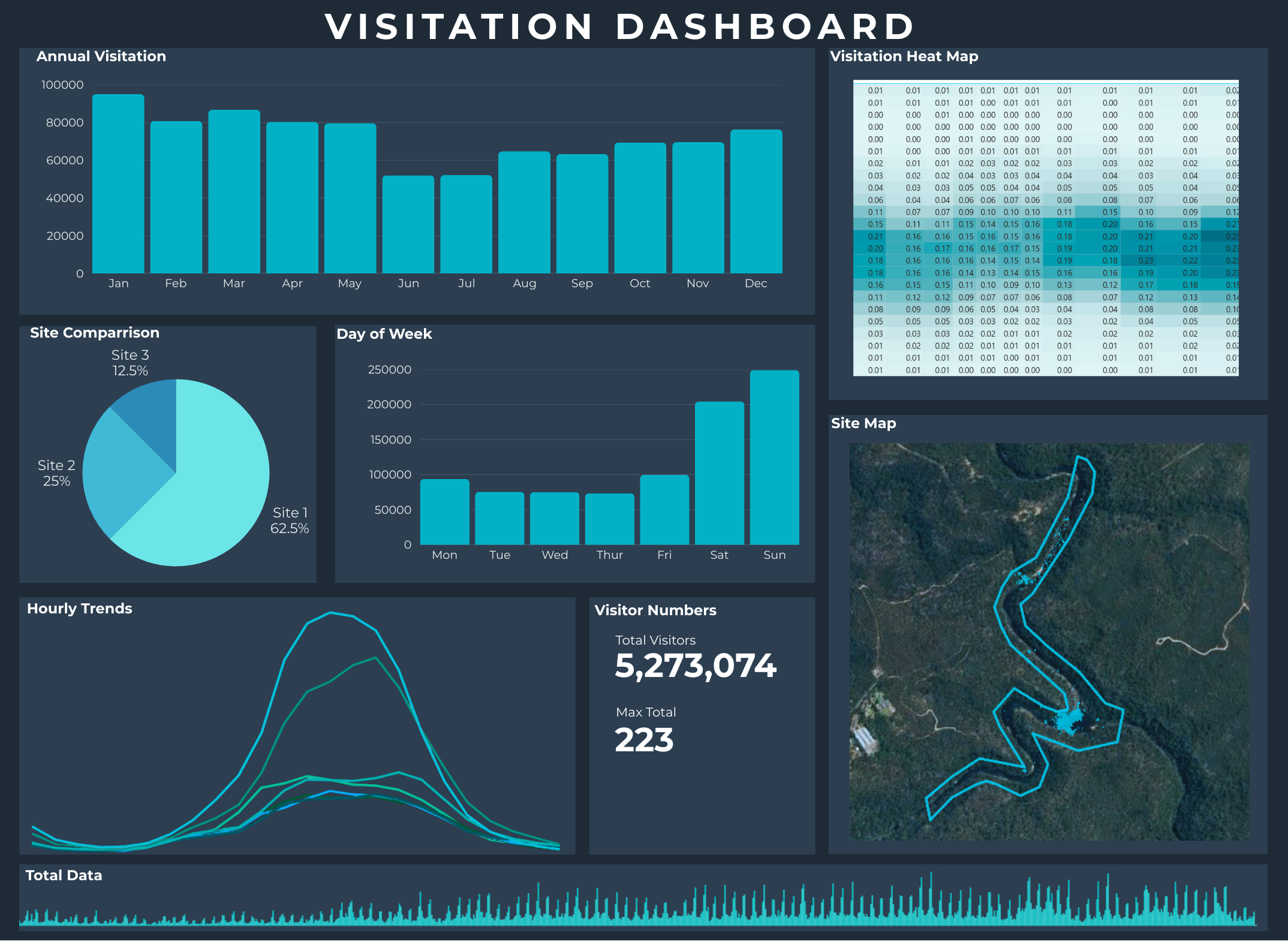
The Water Safety Visitation Reports developed through the partnership are tailored for each aquatic environment and can be applied to specific locations at rivers, lakes, pools, marine areas, and public waterfronts. Each report includes:
- Customised geofencing for individual locations;
- Five years of historical visitation data;
- Seasonal, monthly, and daily usage trends;
- Visitor demographic profiling and travel patterns;
- Heatmaps and comparative visitation indices.
These reports provide insights that go beyond average visitation numbers—offering detailed, privacy-safe data on user behaviours, visitor profiles, and travel origins. This supports Royal Life Saving’s call for risk management strategies that account for the nature of users, the activities they undertake, and the way different sites are used throughout the year.
“This is about harnessing the transformational insights of people movement data into practical strategies,” said Anthony Blunden, Director at Twin Fin Consulting.
“Knowing who visits aquatic spaces, when they come, and how they move through those areas allows for more confident and context-specific decisions.”
“We’re proud to support this partnership,” said Ricki Jones, Director at Data Consulting.
“By unlocking detailed, privacy-safe movement data, we’re helping the aquatic risk management experts at Royal Life Saving to enhance place-based prevention strategies.”

Image: geospatial analysis of site visitations
How does the service work?
Water Safety Visitation Reports are generally incorporated into Royal Life Saving’s Aquatic Risk Management services and are tailored to each aquatic location.
The service was recently incorporated into a comprehensive review of place-based prevention strategies across the Cairns Region and were used to inform the strategy adopted by Cairns Regional Council (read more here: https://www.royallifesaving.com.au/about/news-and-updates/news/2025/sep/case-study-inland-waterway-safety )
They are available through Royal Life Saving as part of a preferred partner arrangement with Twin Fin Consulting and Data Consulting. These services are designed to complement Royal Life Saving’s broader aquatic risk management tools and expertise and support stronger, evidence-based decision-making at local, regional and national levels.
To find out more, or to request a Water Safety Visitation Report for your site or region, please contact your Royal Life Saving State or Territory Office, or email aquatics@rlssa.org.au