Published 5 November 2026
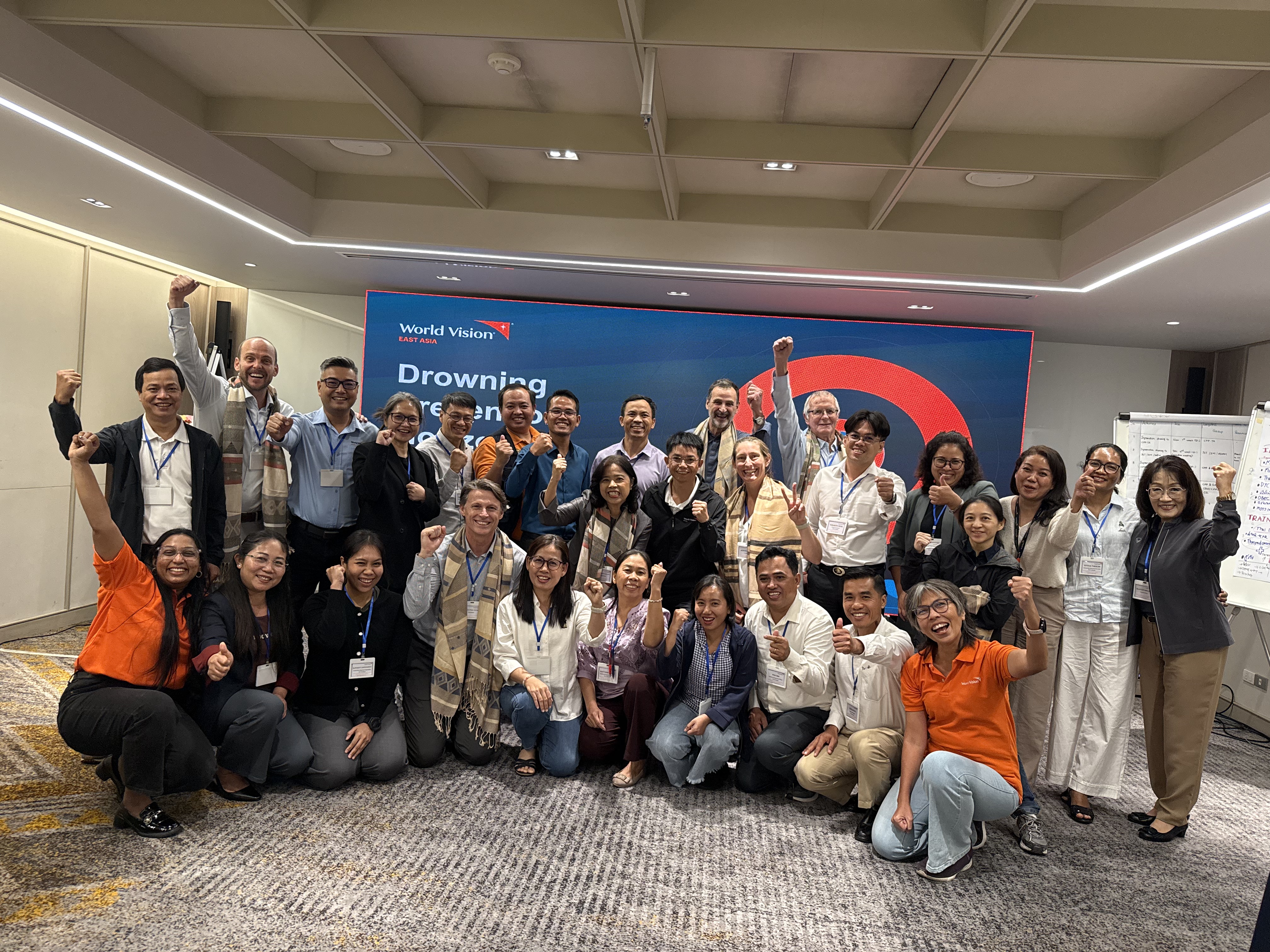
Royal Life Saving Society – Australia, Surf Life Saving Australia and the International Life Saving Federation (ILS) Asia-Pacific supported World Vision last week to deliver a three-day drowning prevention workshop in Vientiane, Lao PDR.
Participants included drowning prevention focal points from World Vision teams in Cambodia, Lao PDR, Myanmar, Thailand and Viet Nam, countries where drowning is one of the leading causes of child death.
World Vision teams in these countries work every day in child protection, health, WASH, education and disaster risk reduction. The workshop explored how child drowning can be prevented through these programs, guided by the WHO Global Strategy for Drowning Prevention, which sets out strategic pillars and key interventions for reducing drowning.
Working through the Strategy, each country team developed a drowning risk profile covering people, places and contexts, mapped local stakeholders and systems, and identified practical entry points for drowning prevention within existing programs.
Royal Life Saving Australia Chief Executive Officer, Dr Justin Scarr, said:
"The Global Strategy reinforces that drowning prevention works best when it is community-led. World Vision already reaches children and families through health, education and child protection, so adding a dose of drowning prevention will enhance existing relationships and protect children from drowning in everyday life, en route to school and during flooding."
Case studies were presented by representatives of National Drowning Prevention Policies in Thailand and Viet Nam, and Dr David Meddings from the World Health Organization joined for his final technical workshop on drowning prevention before retirement.
ILS Asia-Pacific President and Surf Life Saving Australia Head of Mission, Mr Peter George AM, said:
"The World Vision workshop reinforced that International Life Saving Federation's greatest impact is often well away from established lifesaving nations and systems, and into the countries and communities most affected by drowning. Drowning is a leading killer of children across these countries, and the solutions involve supervision, survival swimming and disaster risk reduction."
Local contexts and community-based expertise shaped much of the discussion, reinforcing that the impact of drowning is felt deeply by local communities, who are also best placed to build and deliver solutions.
Royal Life Saving Australia thanks World Vision for the invitation and the trust, and its partners at Surf Life Saving Australia and ILS Asia-Pacific for their shared commitment to the region.


