Published 13 October 2026
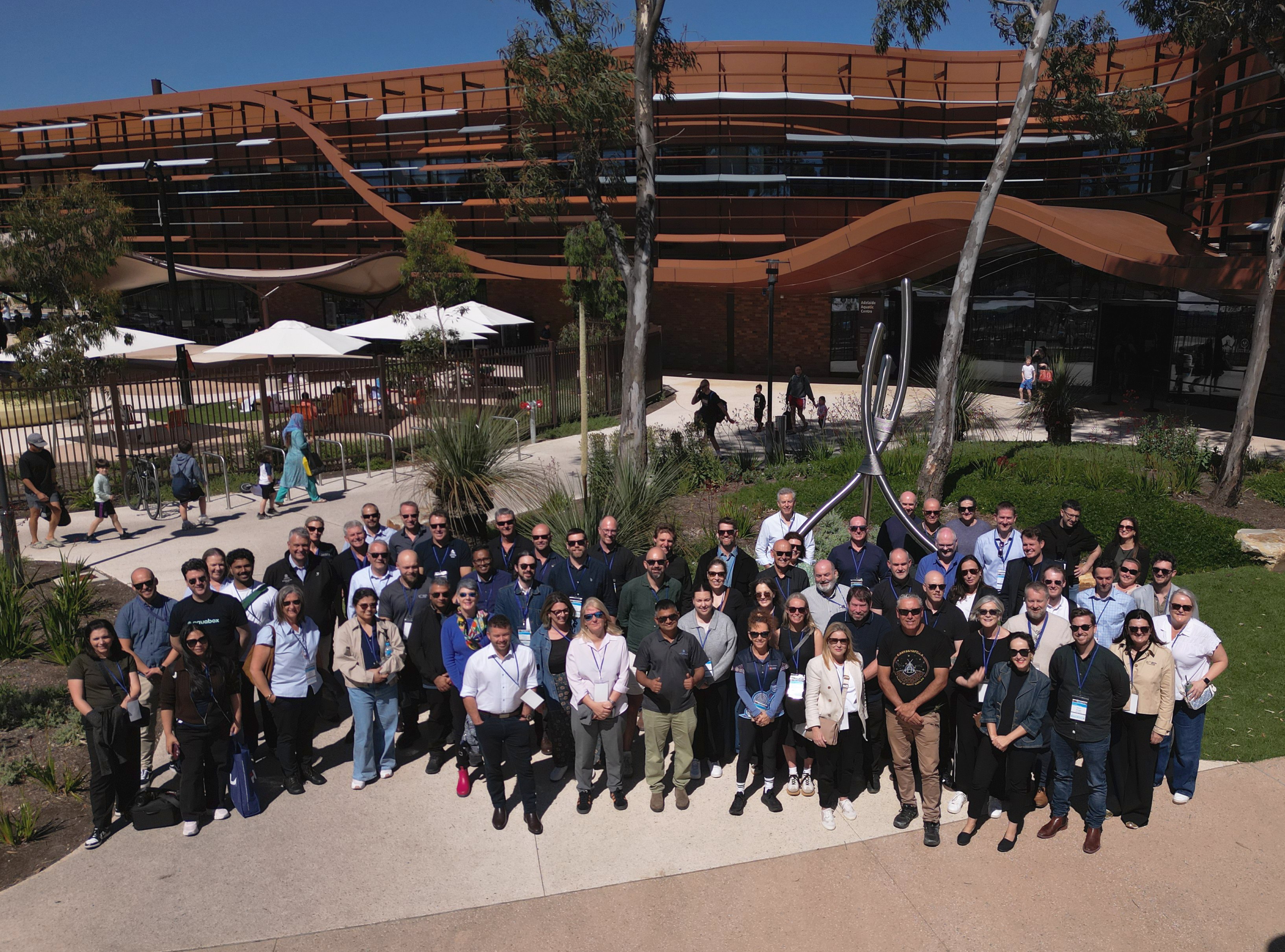
Australia’s community swimming pools are at a crossroads. Around 500 of the nation’s local government-owned public pools are approaching end of life by 2030, and last week in Adelaide more than 100 experts from across government, industry and community came together to agree on the changes needed so generations is Australian’s can learn to swim, play and connect at their local pool, well into the future.
The National Aquatic Infrastructure Symposium 2026, convened by Royal Life Saving Society – Australia and co-hosted with the Office for Recreation, Sport and Racing, South Australian Government, was held on 7–8 October. Delegates toured Payneham Memorial Swimming Centre, the SA Aquatic & Leisure Centre and Adelaide Aquatic Centre before attending a national forum that closed with workshops building a national plan to save community swimming pools.
Royal Life Saving Society – Australia Chief Operating Officer RJ Houston said the Symposium was about turning a deep concern into a shared direction.
“Community swimming pools are essential social infrastructure. They are where children learn the skills that keep them safe around water, where older adults stay active and connected, and where communities gather during a hot summer. If we don’t act, we risk being the generation that let them slip away,” Mr Houston said.
“The scale of the renewal task is clear. The Symposium brought government, operators, designers, planners and community voices into one room to agree on the most pressing problems and solutions needed. No single organisation or layer of government can fix this alone.”
The Symposium built on similar events held by Royal Life Saving Australia in 2025 and 2024.
Five national challenges
Delegates at the National Aquatic Infrastructure Symposium 2026 worked through five problem statements, debating the causes, impacts and the consequences of inaction. Those problems included
1. Ageing pools - the average public pool, was built in 1968, with a 50-year life expectancy. Around 500 are approaching end of life by 2030.
2. Pool deserts - 6 million Australians (24%) live beyond a 10-minute drive of a public pool. A figure that will rise to 7.3 million (29%) by 2032 without action.
3. Pools under pressure - existing pools in growing suburbs are struggling to keep up with population increases, leaving more people competing for limited lane space, long learn-to-swim wait lists and crowded access to water.
4. Cost escalation - pool construction is prone to cost blowouts. A 2026 review of 26 projects found a median cost increase of 67.1% between announcement and delivery, with half needing substantial descoping.
5. Facilities not fit for purpose - many older pools no longer match the needs of communities today, meaning gaps exist, from accessibility and inclusion to demands for more warm-water programs, and a focus on learning and wellbeing.
A national plan on a page
Insights from the workshops are being drawn together into a national plan to save community swimming pools, co-designed by the sector, to guide better planning, policy and funding toward safe, sustainable and viable local pools.
Royal Life Saving will share the draft plan with Symposium participants and partners for testing in the coming months, and invites governments, operators and industry to keep working together to put it into practice.


