Published 3 September 2026
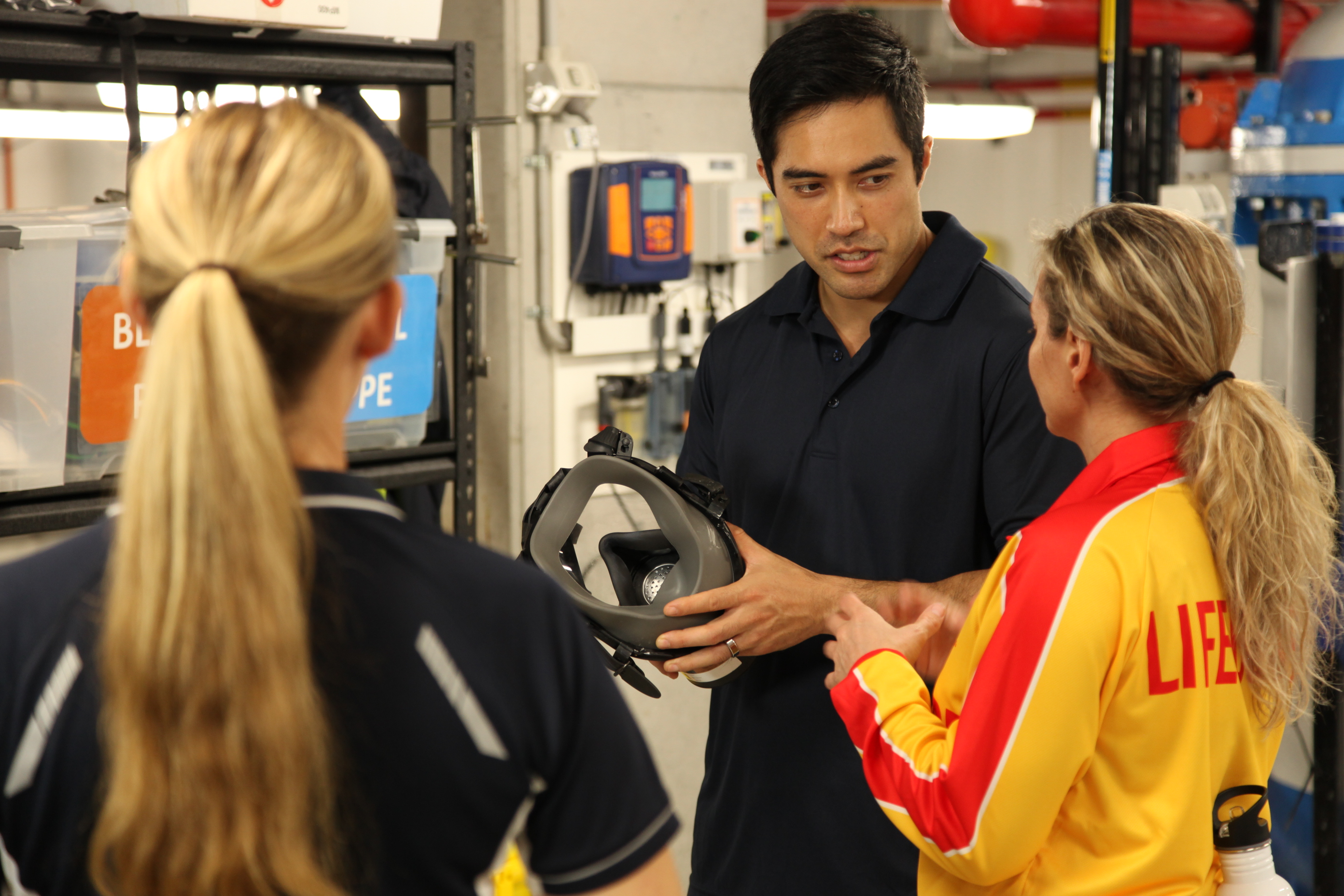
Guidance note: Changes to Airborne Contaminants Legislation — Implications for the National Aquatic Industry
Background / context
Australia is transitioning its work health and safety regulatory scheme relating to airborne contaminants from the Workplace Exposure Standards (WES) to Workplace Exposure Limits (WEL), with new limits applying from 1 December 2026. While most limits have been finalised and many have been lowered, nine chemicals — including chlorine — remain under ministerial review and will carry over unchanged for now (see Legislative context, below). Relevant to aquatic facilities is hydrogen chloride, whose Peak limitation falls from 5 ppm to 2 ppm under the WEL — the one aquatic-relevant figure that actually changes on 1 December 2026, and, because Victoria adopts the WEL list on its own timeline, the one place Victorian and interstate numbers can genuinely diverge for a period (see the Victorian jurisdictional note in Legislative context, below). However, the underlying legal duty for pool owners and operators has not changed: workers, contractors or patrons must not be exposed above any applicable (ceiling) limit, and all exposure must be kept as low as reasonably practicable.
Aquatic facilities present unique exposure scenarios. Aquatic staff may be exposed to certain airborne contaminants depending on the chemicals and substances used at the facility, the level of ventilation, safe chemical handling processes and safe management of substances, including dusts. Plant room operators and maintenance staff may experience intermittent but higher-risk exposures during chemical handling, dosing, routine maintenance (such as shock doses), spills or system faults. Construction and refurbishment activities introduce additional risks, including concrete and crystalline silica dust, which require the same level of control as routine operations.
Members of the National Aquatic Industry Committee have researched the scheme and the implications for the aquatic industry and put together this document to help aquatic facility owners and operators make informed decisions about risk management. Please note this document does not replace the need for local due diligence, analysis and appropriate mitigations. We should note none of the authors are chemistry experts, however, there are several aquatic technical operations experts in management of water quality and chemical safety at public aquatic venues.
Purpose
This paper explains Australia's updated workplace exposure requirements and what they mean for aquatic facilities, including indoor pools, plant rooms, and construction or maintenance activities. It outlines what reasonable due diligence looks like for aquatic facility owners and operators and how to manage uncertainty.
Legislative context
Under Australian Work Health and Safety laws, aquatic facility owners and operators have a primary legal duty to ensure a safe workplace free from harm to staff (whether paid or voluntary), contractors and patrons.[1],[2] Regulations are in place relating to managing risk and exposure to airborne contaminants. This scheme is being transitioned from the current Workplace Exposure Standards scheme to a newly named Workplace Exposure Limits scheme.
The current exposure standards scheme applies until 30 November 2026. The new exposure limits scheme will apply from 1 December 2026.[3] Some limits remain unchanged, while others have been lowered.[4],[5] The core legal duty remains the same: workers, contractors and patrons must not be exposed above the limit, and exposure must be kept as low as reasonably practicable.
Exposure limits do not represent a boundary between safe and unsafe. Irritation or harm may occur below a published limit, and meeting a limit does not remove the need for effective controls.
Update — nine chemicals, including chlorine, are unchanged on 1 December 2026, but remain under active ministerial review In 2024, WHS ministers agreed to the WEL list for most chemicals but requested further impact analysis for nine — benzene, chlorine, copper, formaldehyde, hydrogen cyanide, hydrogen sulfide, nitrogen dioxide, respirable crystalline silica and titanium dioxide.[6] Safe Work Australia's Decision Regulatory Impact Statement (June 2026) recommended lowering chlorine to a TWA of 0.1 ppm plus a Peak limitation of 0.4 ppm.[7] On 24 June 2026, Safe Work Australia reported that a majority of WHS ministers had not reached the two-thirds majority needed to support this, and instead requested further work.[8],[9] Safe Work Australia's published position states plainly: ‘there will be no changes to the exposure limits for the 9 chemicals from 1 December 2026’ — so chlorine's current Peak limitation of 1 ppm (3 mg/m³) carries over unchanged on that date. The nine chemicals remain under active ministerial review, and this should be monitored rather than treated as resolved. |
Jurisdictional note — Victoria applies the WEL list on its own timeline Victoria is the only Australian jurisdiction that has not adopted the model Work Health and Safety laws. Exposure to airborne contaminants in Victorian workplaces is regulated under the Occupational Health and Safety Act 2004 (Vic) and the Occupational Health and Safety Regulations 2017 (Vic), which require employers to ensure exposure standards are not exceeded (r. 165) and to carry out atmospheric monitoring where they cannot be certain, on reasonable grounds, whether a standard is being exceeded (r. 166). The Victorian regulations adopt Safe Work Australia’s WES list by reference.[10] Because the WEL list is a new, renamed instrument, it does not apply automatically in Victoria. WorkSafe Victoria has consulted on proposed Occupational Health and Safety Amendment (Workplace Exposure Limits) Regulations (public comment closed 27 February 2026), with commencement proposed to align with the national date of 1 December 2026.[11] At the time of publication, the amendment regulations had not been made. Victorian duty holders must continue to comply with the WES list until Victorian adoption commences, and should monitor WorkSafe Victoria and the Victorian legislation register for confirmation.[12] Practical effect: chlorine’s Peak limitation of 1 ppm (3 mg/m³) is identical under both lists, so the position for chlorine in Victoria does not depend on timing. Hydrogen chloride differs: the WEL Peak limitation of 2 ppm (2.98 mg/m³) applies in model jurisdictions from 1 December 2026, while 5 ppm (7.5 mg/m³) continues in Victoria under the WES until adoption commences. Operators working across state lines may prefer to apply the more stringent value at all sites. References in this guide to officer ‘due diligence’ reflect the model WHS laws. Victoria’s OHS Act does not currently impose an equivalent positive officer duty; one is scheduled to arrive with Victoria’s dangerous goods reforms, planned to commence in 2028. Victorian readers should read the due diligence discussion through the OHS Act’s (Vic.) general duties, qualified by ‘so far as is reasonably practicable’. |
Understanding exposure limits
Exposure limits describe how much of a substance a worker, contractor or patron can be exposed to in the air. Safe Work Australia defines three distinct limit types:[13]
- Time-weighted average (TWA): the average amount of a substance a person may be exposed to over a normal working day, usually eight hours. Intended to protect against repeated, day-to-day exposure. TWA figures can be adjusted for longer or shorter working days.
- Short-term exposure limit (STEL): a short-period average, typically 15 minutes, designed to prevent acute irritation or injury from brief but higher concentrations.
- Peak limitation: a hard ceiling — “the maximum or peak concentration of an airborne contaminant measured over the shortest analytically practicable period of time, and not exceeding 15 minutes.”[14] A peak limitation cannot be adjusted for longer or shorter working days, and exposure above it is not allowed at any time, however brief.
Why this distinction matters for aquatic facilities Chlorine, hydrogen chloride and ozone — the three substances most relevant to aquatic disinfection — are each Peak limitation only, under both the current WES and the new WEL.[15] None of the three has a TWA or STEL figure. This means there is no averaging: a single reading above the peak value is a breach in its own right, regardless of how brief. This is reflected throughout the exposure limits table below. |
Operators should understand whether their activities could reasonably result in exposure above exposure limits.
Due diligence in an aquatic facility
Due diligence requires owners and operators to be informed, proactive and systematic in managing airborne risks.[16] In an aquatic facility this typically includes:
- identifying where airborne exposure could occur
- understanding which chemicals and dusts are relevant
- implementing controls that prevent or minimise exposure
- monitoring air quality where uncertainty exists
- reviewing controls when conditions change or issues arise
Identifying realistic airborne risks
Plant rooms and chemical handling areas
Higher-risk tasks include chemical container changeovers, manual handling of liquids and powders, maintenance on dosing systems, spill response, and entry to poorly ventilated spaces. Exposure may be intermittent but can be significant.
Gases and vapours that can be encountered include chlorine gas (from dedicated gas disinfection systems, or as an incompatibility reaction), hydrochloric acid vapours, carbon dioxide used for pH control, and ozone where secondary disinfection systems are installed.
Chemistry clarification — chlorine gas is not a routine disinfection byproduct The substance regulated by the Peak limitation of 1 ppm (3 mg/m³) is chlorine gas (Cl₂) itself, not chlorine in pool water generally.[17] This creates two distinct risk profiles: (i) Facilities that use a dedicated bulk chlorine gas disinfection system carry a real, direct exposure risk to chlorine gas and must manage it accordingly (see the plant room controls below); or (ii) Facilities that use sodium or calcium hypochlorite dosing (liquid or solid) — the majority of Australian aquatic centres — are unlikely to generate chlorine gas exposure during normal operation: dissolving hypochlorite in water forms hypochlorous acid and hypochlorite ion, not chlorine gas.[18] The exception is an incompatibility incident, where hypochlorite solution is mixed with an acid solution (pH below roughly 4), which drives off-gassing of chlorine gas and is a genuine hazard requiring segregated storage and handling.[19],[20] Separately, the familiar “pool smell” at the water surface is not chlorine gas at all — it is trichloramine, formed when hypochlorous acid reacts with ammonia and nitrogenous compounds introduced by bathers (sweat, urine, personal care products). Trichloramine is a water-quality and ventilation issue, addressed separately under combined chlorine below, not a chlorine gas exposure. |
Powders and solids commonly handled include calcium hypochlorite, sodium bisulphate, sodium bicarbonate, sodium thiosulphate, perlite (and other) filter media, and construction-related dusts such as concrete and other dusts that could contain crystalline silica.
Construction, maintenance and refurbishment
Common airborne risks include concrete and cement dust, crystalline silica from tiles or grout, ultra-fine filter media replacement, welding fumes, paints and solvents. These risks apply even when work is temporary or undertaken by contractors.
Substance risk management
Some substances have published Australian exposure limits, while others do not. Where no limit exists, the duty to manage risk still applies.
The table below reflects what is currently published in the Safe Work Australia WES/WEL lists and how it applies to aquatic facilities.[21] Rows shaded amber carry a Peak limitation only — a ceiling that must never be exceeded, not an averaged exposure.
Disclaimer: the substances listed below are those most commonly encountered in aquatic facility operations. This is not an exhaustive list of hazardous chemicals that may be present on site, and operators retain a duty to identify and manage the risks of all hazardous chemicals they use, store or generate, whether or not those chemicals appear here. The indicative risk rating reflects the potential severity of harm from exposure to each substance itself — based on its toxicity, corrosivity and reactivity — and is not a reflection of whether the substance carries a workplace exposure limit. A substance can present a real risk of harm even where no WES/WEL figure is published for it.
Substance | Typical use in aquatic facilities / exposure pathway | Current WES | New WEL | Main exposure concern | Risk | Common risk controls (typical) |
|---|---|---|---|---|---|---|
Chlorine (gas) | Disinfection systems using chlorine gas; potential release during faults or mixing incidents | Peak limitation: 1 ppm (3 mg/m³) | Peak limitation: 1 ppm (3 mg/m³) — unchanged on 1 Dec 2026. SWA's proposed reduction to TWA 0.1 ppm / Peak 0.4 ppm did not reach the two-thirds ministerial majority needed on 24 June 2026; the 9 chemicals remain under active review with no published timeline.[22] | Highly irritating, toxic gas; acute respiratory injury risk. Relevant to (1) facilities still using bulk chlorine gas disinfection, and (2) accidental release if hypochlorite is mixed with acid — not a byproduct of routine hypochlorite dosing. | High | Dedicated chemical rooms; segregation from acids; mechanical ventilation to outdoors; gas detection and alarms where relevant; automated systems; restricted access; emergency response procedures and drills |
Sodium hypochlorite (liquid) | Liquid disinfection; widely used in dosing systems | No specific WES listed | No specific WEL listed | Dissolves to form hypochlorous acid (routine, no gas release); reacts with acids to release chlorine gas (incompatibility only); reacts with ammonia to form chloramines | Medium | Closed and automated dosing; segregation from acids; ventilation in dosing areas; clear incompatibility controls; spill response procedures |
Hydrogen chloride (hydrochloric acid) | pH control; cleaning and descaling | Peak limitation: 5 ppm (7.5 mg/m³) | Peak limitation: 2 ppm (2.98 mg/m³) — lowered | Corrosive vapour or mist; eye, skin and respiratory irritation | High | Enclosed dosing; bunding; ventilation; segregation from chlorine products; emergency eyewash and shower; controlled decanting procedures |
Sodium bisulphate (powder form) | pH control (after being mixed with water) | No specific WES listed (treated as dust) | No specific WEL listed (treated as dust) | Acidic dust causing respiratory and eye irritation | Medium | Minimise powder handling; damp transfer where practicable; ventilation; good housekeeping; respiratory protection where dust cannot be otherwise controlled |
Calcium hypochlorite (granular or powder) | Manual disinfection (shock doses); sometimes mixed into a solution (liquid) | No specific WES listed (treated as dust) | No specific WEL listed (treated as dust) | Dust inhalation; violent reaction risk with moisture or contaminants | High | Enclosed storage; dry handling controls; ventilation; segregation; clear procedures; PPE for handling tasks |
Sodium bicarbonate | Alkalinity control (powder) | No specific WES listed (treated as dust) | No specific WEL listed (treated as dust) | Nuisance dust causing irritation | Low | Ventilation; careful handling; good housekeeping; respiratory protection if visible dust generated |
Sodium thiosulphate | Dechlorination (powder / crystals) | No specific WES listed (treated as dust) | No specific WEL listed (treated as dust) | Low toxicity; dust irritation | Low | Basic dust controls; ventilation; good housekeeping |
Carbon dioxide | pH control using CO₂ dosing; cylinder storage | TWA 5,000 ppm; STEL 30,000 ppm | TWA 5,000 ppm; STEL 30,000 ppm — unchanged | Asphyxiation risk in poorly ventilated or confined spaces | Medium | Adequate plant-room ventilation; cylinder management; leak detection; confined space controls where applicable |
Ozone (where used) | Secondary disinfection systems | Peak limitation: 0.1 ppm (0.2 mg/m³) | Peak limitation: 0.1 ppm (0.2 mg/m³) — unchanged[23] | Strong respiratory irritant at low concentrations | High | Enclosed systems; interlocked ventilation; off-gas destruction; isolation during maintenance |
Perlite (silicon dioxide and aluminium oxide) | Filter media; exposure during maintenance / replacement of media | Inhalable dust 10 mg/m³ | Inhalable dust 10 mg/m³ — unchanged | Dust irritation during media change-out | Medium | Wet methods where practicable; local exhaust; minimise dry sweeping; respiratory protection during high-dust tasks |
Concrete and crystalline silica dust | Construction, refurbishment, tile cutting, concrete works | Respirable crystalline silica 0.05 mg/m³ | Respirable crystalline silica 0.05 mg/m³ — unchanged. Also one of the nine chemicals under further Safe Work Australia review. | Chronic lung disease and cancer risk | High | Eliminate dry cutting; wet methods; on-tool extraction; isolation of work areas; air monitoring where required; contractor management |
Typical risk controls in aquatic facilities
Pool halls
Commonly expected controls include ventilation systems that move air effectively at deck level, balanced air supply and exhaust to prevent stagnant air above the water, effective water chemistry, circulation and secondary disinfection — or in the alternative sufficient freshwater and fresh air intakes — to minimise chloramine formation, investigation of repeated eye or respiratory irritation complaints, and operational controls during peak usage periods.
Routine personal air monitoring for lifeguards and other staff is not generally recommended unless there are reasonable or founded complaints, incidents or system failures.
Plant rooms and chemical storage areas
Commonly expected controls include automated and enclosed dosing systems, segregation of incompatible chemicals, bunding and spill containment, natural and/or mechanical ventilation appropriate to the space and tasks, clear procedures for chemical handling and changeovers, trained personnel with restricted access, appropriate and fitted personal protective equipment including respiratory protection where appropriate, spill containment equipment and procedures, and emergency response equipment and training.
Air monitoring is often justified where ventilation is limited, after incidents, or where chemical vapours could reasonably accumulate.
Powder handling
Expected controls include minimising manual handling of powders, enclosed transfer or wet methods where appropriate and practicable, local exhaust or general ventilation, appropriate respiratory protection where higher-order controls are not practicable, and good housekeeping to prevent secondary dust exposure. Good housekeeping includes appropriate separation of chemicals, use of raised platforms and/or sealed containers, and ensuring any spills are quickly cleaned and disposed of appropriately.
Construction and maintenance activities
Expected controls include risk assessments that address airborne dust, silica management measures where concrete, tiles or grout are disturbed, sealing and separating construction areas from operating pool spaces, scheduling dusty work outside operating hours where possible, wet cutting and on-tool extraction, contractor induction and supervision, and air monitoring where silica exposure is reasonably possible.
Temporary work does not remove the obligation to manage exposure.
Personal Protective Equipment (PPE)
Personal protective equipment is a supplementary control and does not replace higher-order controls such as elimination, substitution, engineering or administrative measures. PPE is required where residual risk remains after those controls have been applied, or where short-duration or non-routine tasks introduce foreseeable exposure.
Personal protective equipment is issued to individuals and should not be treated as shared communal equipment unless specifically designed for that purpose (for example, emergency spill kits with disposable components). Sharing of gloves, respirators, goggles or clothing between staff is not appropriate where the equipment is reusable, as this may compromise hygiene, fit, integrity and performance.
Expected controls include:
- A documented PPE risk assessment aligned to specific tasks (chemical handling, media changeover, spill response, confined plant room work, construction interface).
- Selection of PPE based on Safety Data Sheets (SDS), exposure pathways and ventilation conditions.
- Provision of correctly sized and fitted equipment.
- Training in correct use, limitations, cleaning, maintenance and storage.
- Replacement schedules and inspection regimes.
- Clear supervision to ensure PPE is worn where required.
PPE must be compatible (for example, respiratory protection that does not interfere with eye protection) and suitable for wet and corrosive environments typical of aquatic facilities.
Health monitoring
Health monitoring is not automatically required simply because chemicals are used in the workplace.
It is required only where a chemical listed in WHS regulations is used and there is a significant risk to health from ongoing exposure.
In most aquatic facilities, health monitoring for chemical exposure is not expected as a routine activity. It may become necessary where controls are ineffective or exposure is ongoing and significant. Health monitoring does not replace the need to reduce underlying risk to as low as reasonably practicable.
Managing uncertainty
Where exposure limits are unclear or not listed, owners and operators should acknowledge the uncertainty, assess who may be exposed and under what conditions, strengthen engineering and system controls, use air monitoring where uncertainty cannot be resolved by design alone, document decisions, and review outcomes.
Taking reasonable, documented steps to manage uncertainty is a key element of due diligence.
Clarification note — combined chlorine is not the same thing as the chlorine detailed in the WEL Combined chlorine (chloramines, principally trichloramine) is a disinfection by-product, not a substance covered by the WHS workplace exposure limits framework described elsewhere in this guide. It is regulated, in some states and territories only, under separate public health and water-quality schemes. During consultation on the proposed chlorine WEL, some industry discussion papers and commentary referred to combined chlorine or chloramine levels in pool water as a potential — and, in places, widespread — source of non-compliance against the then-proposed limits. Royal Life Saving has conducted detailed research and sought advice from experts, and the current understanding is that, under typical pool operating conditions, chloramine formation does not cause chlorine gas to off-gas into the air.[24],[25] Chloramines form when hypochlorous acid reacts with ammonia and nitrogenous compounds introduced by bathers, producing a distinct compound from chlorine gas — a water-quality and ventilation matter, addressed below. Health and safety impacts: trichloramine off-gassing at the water surface is nonetheless the dominant cause of the “pool smell” and of eye and respiratory irritation in indoor pool halls.[26],[27] Workers such as lifeguards and swim teachers, and for that matter patrons and contractors, may be exposed. Risk increases where there are high bather loads, warm water, agitation features, or ineffective ventilation at deck level, all of which promote chloramine formation. Persistent complaints of eye and respiratory irritation typically indicate elevated combined chlorine in the water, and should prompt a review of water chemistry and ventilation controls. There is no single national WEL/WES figure for combined chlorine in pool water (it is a water-quality parameter rather than an airborne contaminant). State and territory health regulators, and leading international references, set the thresholds summarised below.
Risk controls to keep combined chlorine low include breakpoint (shock) chlorination, adequate water turnover and filtration, promoting bather hygiene (pre-swim showering), secondary disinfection (UV or ozone) to break down chloramines, and sufficient pool-hall ventilation to remove chloramine off-gassing at the water surface. |
Conclusion / Summary
The transition from Workplace Exposure Standards to Workplace Exposure Limits does not change the fundamental obligations of aquatic facility owners and operators. The duty to ensure that workers, contractors and patrons are not exposed to harmful airborne contaminants, and that exposure is kept as low as reasonably practicable, remains unchanged.
For chlorine specifically, the operative limit — now and after 1 December 2026 — is a Peak limitation of 1 ppm (3 mg/m³): a ceiling that must never be exceeded, at any moment.
Most airborne risks in aquatic facilities are well understood and can be effectively managed through good facility design, robust systems of work and appropriate supervision. Effective ventilation, automated and enclosed chemical systems, sound chemical storage and handling practices, and well-managed construction and maintenance activities remain the primary means of controlling risk.
Health monitoring is not automatically required because chemicals are used. It is only required in specific circumstances where there is a significant risk to health and regulatory requirements apply. In most aquatic facilities, prevention and control remain the appropriate focus.
Where exposure limits are unclear or not listed, owners and operators are expected to take a measured, evidence-based approach. This includes recognising uncertainty, strengthening controls, using air monitoring where appropriate, and documenting decisions. Demonstrating informed and proportionate risk management is central to reasonable due diligence under work health and safety laws.
[1] Safe Work Australia — Model Work Health and Safety (WHS) Act. https://www.safeworkaustralia.gov.au/doc/model-work-health-and-safety-act
[2] Safe Work Australia — Model Work Health and Safety (WHS) Regulations. https://www.safeworkaustralia.gov.au/doc/model-work-health-and-safety-regulations
[3] Safe Work Australia — Workplace Exposure Limits (WEL) overview. https://www.safeworkaustralia.gov.au/safety-topic/managing-health-and-safety/workplace-exposure-limits-airborne-contaminants
[4] Safe Work Australia — Workplace exposure limits for airborne contaminants (amended November 2025). https://www.safeworkaustralia.gov.au/sites/default/files/2024-04/workplace-exposure-limits-for-airborne-contaminants_april-2024.pdf
[5] Safe Work Australia — Changes between the WES and WEL. https://www.safeworkaustralia.gov.au/safety-topic/managing-health-and-safety/workplace-exposure-limits-airborne-contaminants/changes-between-wes-and-wel
[6] SPASA — Safe Work Australia releases new Workplace Exposure Limits. https://www.spasa.com.au/news/safe-work-australia-releases-new-workplace-exposure-limits
[7] Safe Work Australia — Proposed workplace exposure limits for 9 chemicals: Decision Regulatory Impact Statement (June 2026). https://www.safeworkaustralia.gov.au/sites/default/files/2026-06/decisionris-proposed_wel_for_9_chemicals_june2026.pdf
[8] Safe Work Australia — Decision Regulation Impact Statement: proposed workplace exposure limits for 9 chemicals — outcome and next-steps statement (24 June 2026). https://www.safeworkaustralia.gov.au/doc/decision-regulation-impact-statement-proposed-workplace-exposure-limits-9-chemicals
[9] ABC News — Chemical exposure limits put on hold despite Safe Work Australia report (24 June 2026). https://www.abc.net.au/news/2026-06-24/hazardous-chemical-exposure-limits-on-hold/106833750
[10] WorkSafe Victoria — Workplace exposure standards and limits. https://www.worksafe.vic.gov.au/workplace-exposure-standards-and-limits
[11] Engage Victoria — Workplace exposure limits for airborne contaminants (Regulatory Impact Statement and proposed amendment regulations). https://engage.vic.gov.au/WEL-feedback
[12] Victorian legislation register (legislation.vic.gov.au). https://www.legislation.vic.gov.au/
[13] Safe Work Australia — Workplace exposure limits for airborne contaminants (amended November 2025). https://www.safeworkaustralia.gov.au/sites/default/files/2024-04/workplace-exposure-limits-for-airborne-contaminants_april-2024.pdf
[14] WorkSafe Victoria — Workplace exposure standards and limits. https://www.worksafe.vic.gov.au/workplace-exposure-standards-and-limits
[15] Safe Work Australia — Workplace exposure limits for airborne contaminants (amended November 2025). https://www.safeworkaustralia.gov.au/sites/default/files/2024-04/workplace-exposure-limits-for-airborne-contaminants_april-2024.pdf
[16] Safe Work Australia — Model Code of Practice: Managing risks of hazardous chemicals in the workplace (2021). https://www.safeworkaustralia.gov.au/doc/model-code-practice-managing-risks-hazardous-chemicals-workplace
[17] Agency for Toxic Substances and Disease Registry — Chlorine ToxGuide. https://www.atsdr.cdc.gov/toxguides/toxguide-172.pdf
[18] UK Health Security Agency — Sodium hypochlorite: toxicological overview. https://www.gov.uk/government/publications/sodium-hypochlorite-properties-incident-management-and-toxicology/sodium-hypochlorite-toxicological-overview
[19] Indiana Department of Health — How to Shock the Pool. https://www.in.gov/health/eph/files/How-To-Shock-The-Pool-2022.pdf
[20] NSW Health — Public Swimming Pool and Spa Pool Advisory Document. https://www.health.nsw.gov.au/environment/Publications/swimming-pool-and-spa-advisory-doc.pdf
[21] Safe Work Australia — Workplace exposure limits for airborne contaminants (amended November 2025). https://www.safeworkaustralia.gov.au/sites/default/files/2024-04/workplace-exposure-limits-for-airborne-contaminants_april-2024.pdf
[22] Safe Work Australia — Proposed workplace exposure limits for 9 chemicals: Decision Regulatory Impact Statement (June 2026). https://www.safeworkaustralia.gov.au/sites/default/files/2026-06/decisionris-proposed_wel_for_9_chemicals_june2026.pdf
[23] WorkSafe Victoria — Ozone exposure safety alert. https://www.worksafe.vic.gov.au/safety-alerts/ozone-exposure
[24] Agency for Toxic Substances and Disease Registry — Chlorine ToxGuide. https://www.atsdr.cdc.gov/toxguides/toxguide-172.pdf
[25] UK Health Security Agency — Sodium hypochlorite: toxicological overview. https://www.gov.uk/government/publications/sodium-hypochlorite-properties-incident-management-and-toxicology/sodium-hypochlorite-toxicological-overview
[26] NSW Health — Controlling chloramines in indoor swimming pools. https://www.health.nsw.gov.au/environment/factsheets/Pages/chloramines.aspx
[27] NSW Health — Public Swimming Pool and Spa Pool Advisory Document. https://www.health.nsw.gov.au/environment/Publications/swimming-pool-and-spa-advisory-doc.pdf
[28] NSW Public Health Regulation 2022, Schedule 1. https://classic.austlii.edu.au/au/legis/nsw/consol_reg/phr2022217/sch1.html
[29] Victoria — Public Health and Wellbeing Regulations 2019, r.46. https://www.legislation.vic.gov.au/in-force/statutory-rules/public-health-and-wellbeing-regulations-2019
[30] Victoria Department of Health — Water Quality Guidelines for Public Aquatic Facilities: Managing Public Health Risks (December 2020), Table A2.1. https://www.health.vic.gov.au/sites/default/files/migrated/files/collections/policies-and-guidelines/w/water-quality-guidelines-for-public-aquatic-facilities---managing-public-health-risks---2020.pdf
[31] Queensland Health — Water quality guidelines. https://www.health.qld.gov.au/__data/assets/pdf_file/0021/444612/water-quality-guidelines.pdf
[32] WA Health — Code of practice for the design, construction, operation, management and maintenance of aquatic facilities, s.5.1.2. https://www.health.wa.gov.au/-/media/Files/Corporate/general-documents/water/PDF/CoP-for-design-construction-operation-management-maintenance-aquatic-facilities.ashx
[33] Council for Model Aquatic Health Code — Combined chlorine (chloramines). https://cmahc.org/mahc_sections/1830
[34] World Health Organization — Guidelines for Safe Recreational Water Environments, Vol. 2 (2006). https://iris.who.int/bitstream/handle/10665/43336/9241546808_eng.pdf