Have you considered how stress, conflict or workplace culture can impact the wellbeing of aquatic-industry staff?
Recent workforce insights have shown that aquatic facility workers experience high rates of occupational violence and aggression (OVA) and that staff deal with an estimated 2,500 incidents of abuse each year.
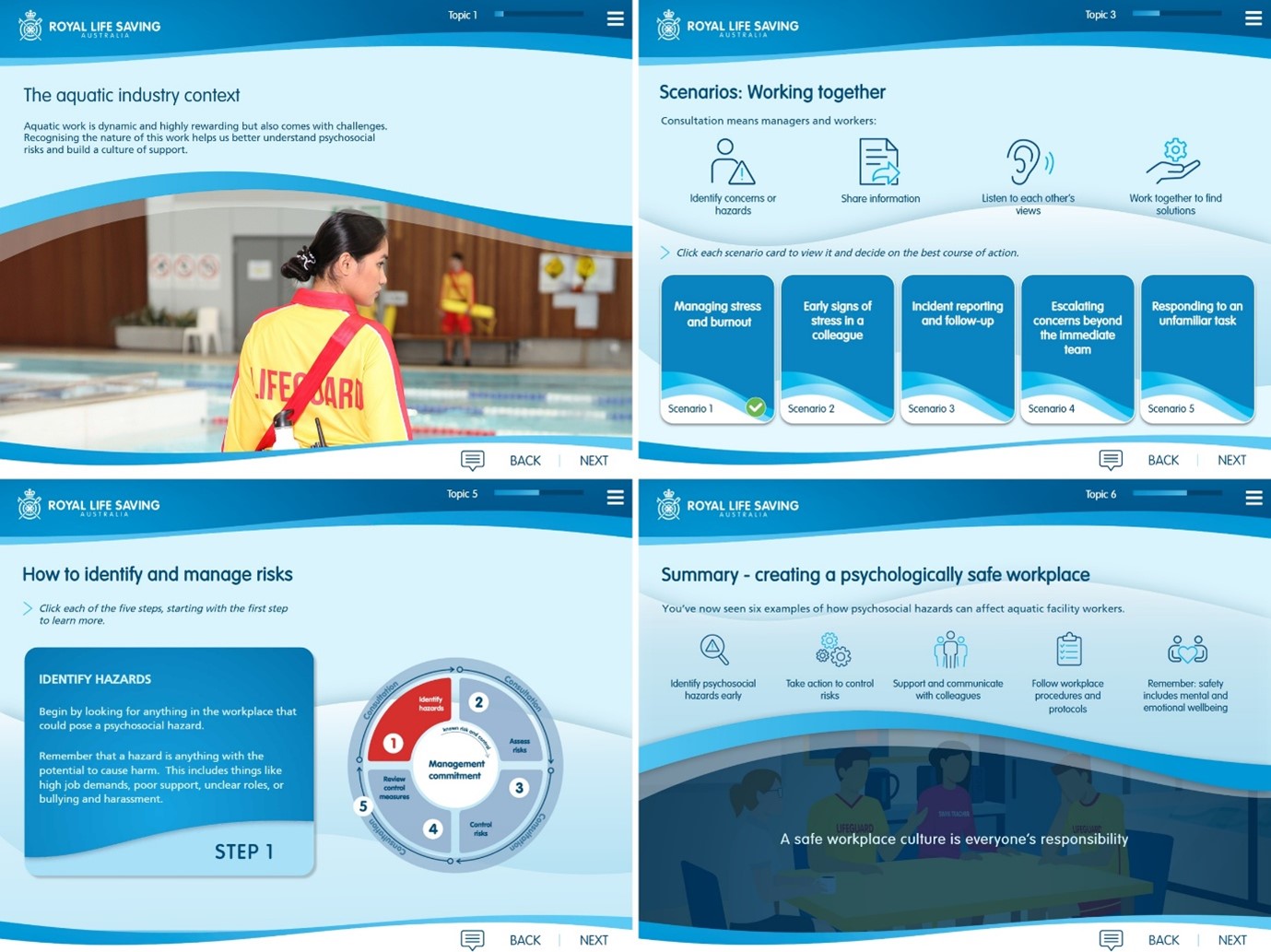
This online module explores the critically important domain of psychosocial safety at aquatic facilities; equipping staff and managers with the tools to recognise, assess and respond to psychosocial hazards and risks in their workplace.
This module is designed for all roles within the aquatic industry including lifeguards, swim teachers, duty managers, facility managers, program instructors and anyone involved in day-to-day operations at aquatic facilities
The content draws on the latest evidence and industry best practice to:
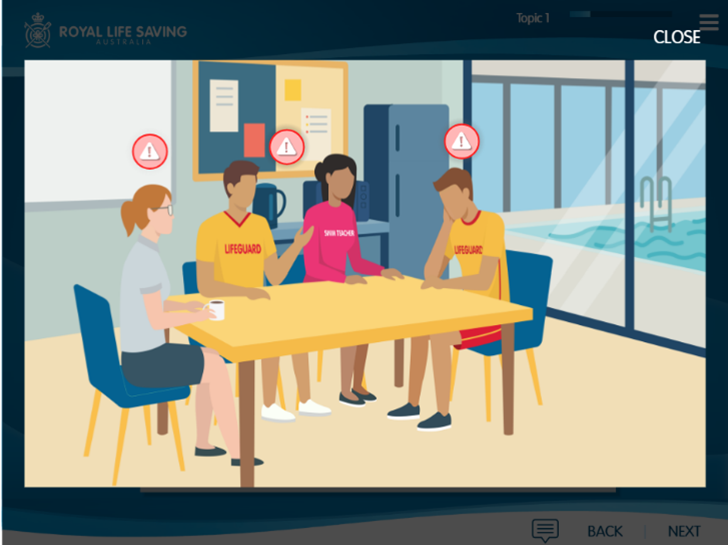
- Explain what psychosocial hazards are and identify common examples and their impacts in aquatic settings
- Identify roles, worker types and situations that may lead to increased vulnerability to psychosocial hazards
- Provide guidance on roles and responsibilities of managers and workers in reflecting on their current workplace practices, identify gaps or risks, and promote individual and workforce wellbeing and resilience
- Implement practical strategies for identifying, assessing and managing psychosocial risks in line with a risk-management framework
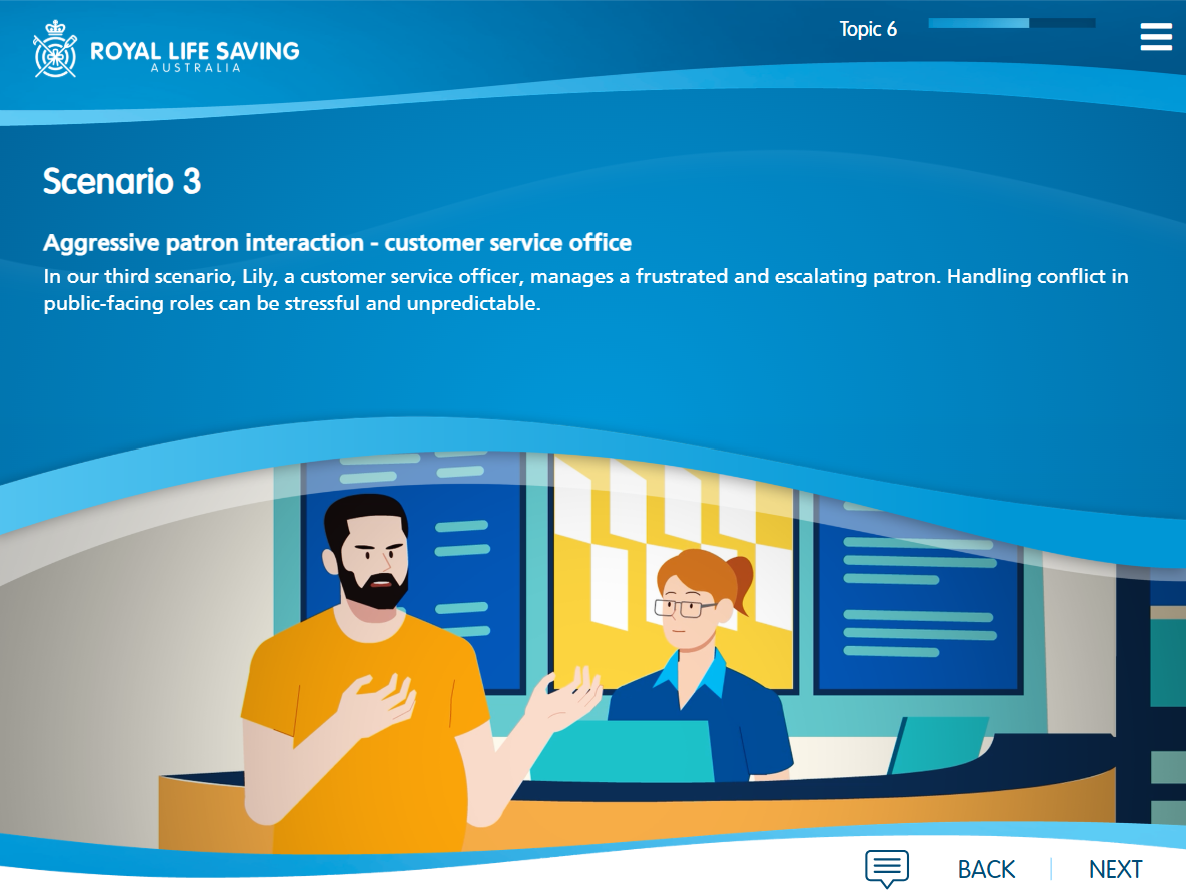
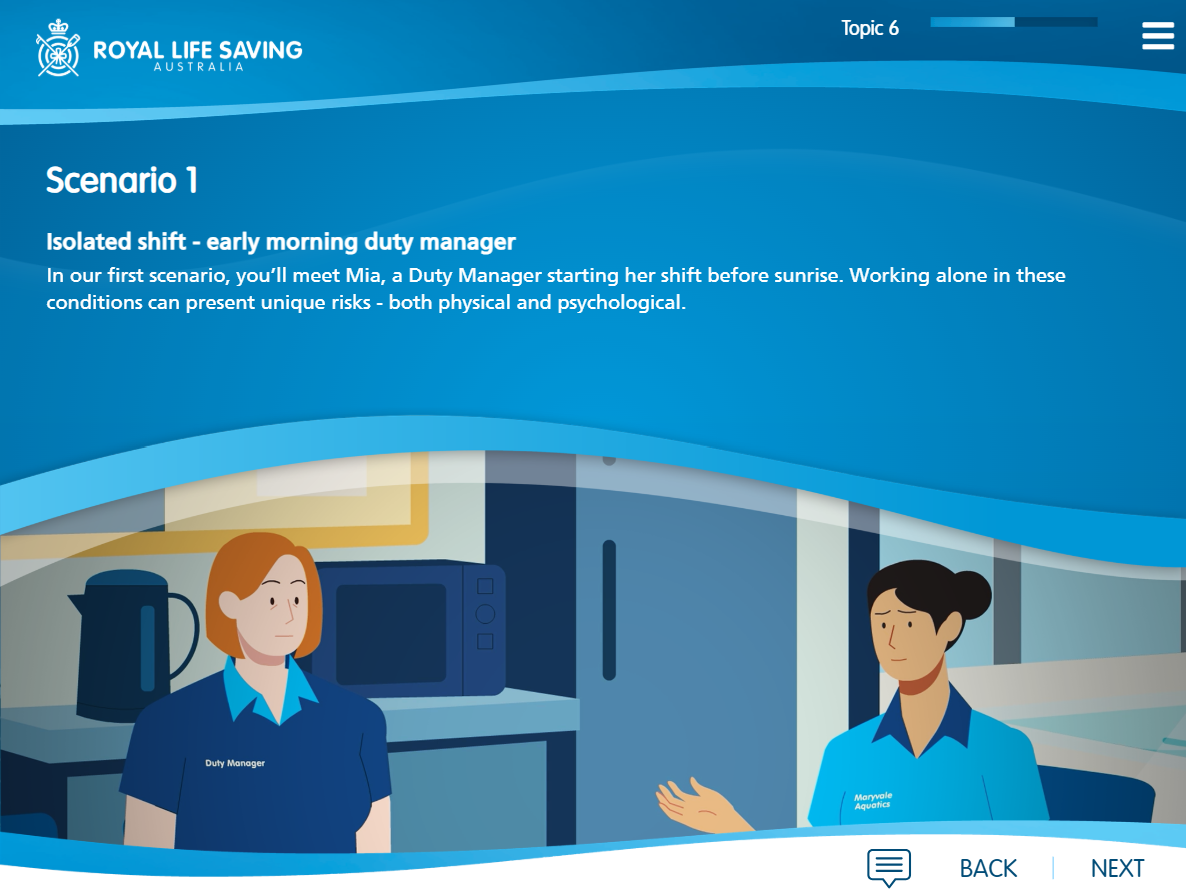
- Take learners through a range of animated scenarios covering typical psychosocial hazards and conflict de-escalation situations and techniques
On completing the module, participants will be better prepared to understand, identify and manage psychosocial safety and apply structured risk management and conflict de-escalation techniques. Recommended learning time is approximately 60 minutes.
To enrol or find out more information use the search fields on this page and/or contact your local Royal Life Saving office.